
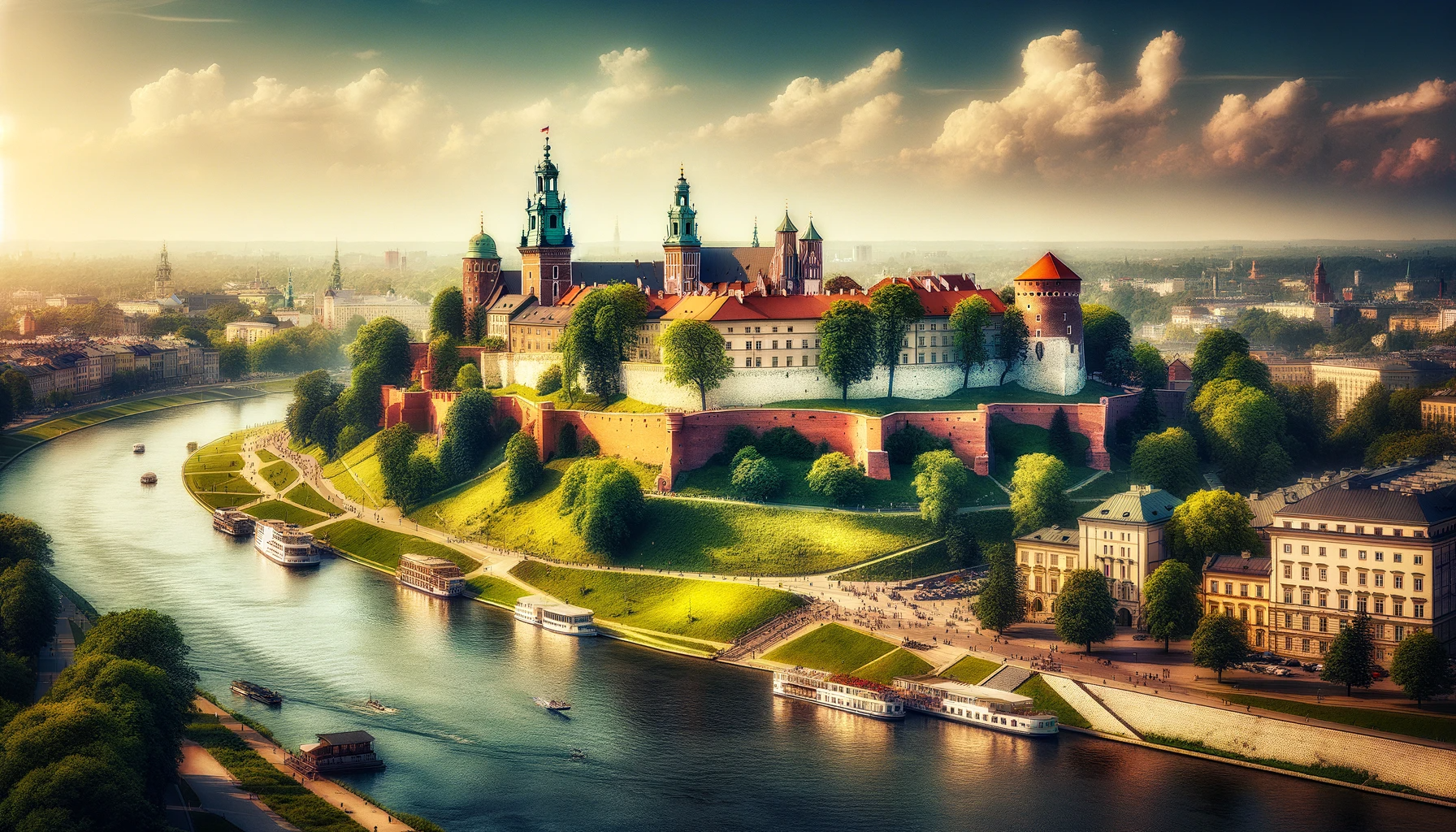
Poland, a country in Central Europe, is rich in history and cultural heritage. Known for its picturesque medieval architecture, like that in Kraków’s old town, and its resilient spirit, Poland has a complex history marked by periods of both independence and occupation. The capital, Warsaw, was meticulously rebuilt after near-total destruction during World War II, symbolizing the nation’s recovery and determination. Poland’s landscape varies from the sandy beaches of the Baltic Sea coast to the rugged peaks of the Tatra Mountains. Poland stands as a testament to the endurance and richness of Eastern European history and tradition.
- New Year's Day Nowy Rok 🔥 Long weekend
- Epiphany Święto Trzech Króli 🔥 Long weekend
- Easter Sunday Niedziela Wielkanocna
- Easter Monday Poniedziałek Wielkanocny
- Labour Day Święto Pracy
- Constitution Day Święto Konstytucji 3 Maja
- Pentecost Zesłanie Ducha Świętego
- Corpus Christi Boże Ciało 🔥 Long weekend
- Assumption Day Wniebowzięcie NMP
- All Saints' Day Wszystkich Świętych
- Independence Day Narodowe Święto Niepodległości
- Christmas Day Boże Narodzenie
- Boxing Day Drugi dzień Bożego Narodzenia
- New Year's Day Nowy Rok
- Epiphany Święto Trzech Króli
- Easter Sunday Niedziela Wielkanocna
- Easter Monday Poniedziałek Wielkanocny
- Labour Day Święto Pracy
- Constitution Day Święto Konstytucji 3 Maja
- Pentecost Zesłanie Ducha Świętego
- Corpus Christi Boże Ciało 🔥 Long weekend
- Assumption Day Wniebowzięcie NMP
- All Saints' Day Wszystkich Świętych
- Independence Day Narodowe Święto Niepodległości 🔥 Long weekend
- Christmas Day Boże Narodzenie
- Boxing Day Drugi dzień Bożego Narodzenia
Frequently Asked Questions
-
Poland has 13 official public holidays in 2026.
-
Poland has 13 official public holidays in 2027.
-
The next public holiday in Poland is All Saints' Day on November 1, 2026 (in 67 days).
-
In 2026, Poland has 3 public holidays falling on a Tuesday or Thursday, creating potential long weekend opportunities by taking one extra day off.
-
In 2027, Poland has 2 public holidays falling on a Tuesday or Thursday, creating potential long weekend opportunities by taking one extra day off.
-
In 2026, the following public holidays fall on a Saturday or Sunday: Easter Sunday, Constitution Day, Pentecost, Assumption Day, All Saints' Day, Boxing Day.
-
In 2027, the following public holidays fall on a Saturday or Sunday: Easter Sunday, Labour Day, Pentecost, Assumption Day, Christmas Day, Boxing Day.
List of Public Holidays in Poland for the year 2024
- New Year’s Day: Monday, 1 January 2024
- Epiphany: Saturday, 6 January 2024
- Easter Sunday: Sunday, 31 March 2024
- Easter Monday: Monday, 1 April 2024
- Labour Day: Wednesday, 1 May 2024
- Constitution Day: Friday, 3 May 2024
- Whit Sunday: Sunday, 19 May 2024
- Corpus Christi: Thursday, 30 May 2024
- Assumption Day: Thursday, 15 August 2024
- All Saints’ Day: Friday, 1 November 2024
- Independence Day: Monday, 11 November 2024
- Christmas Day: Wednesday, 25 December 2024
- 2nd Day of Christmas: Thursday, 26 December 2024
History
- Early History: Inhabited since ancient times, Poland’s history as a nation began with the Piast dynasty in the 10th century.
- Golden Age: The Polish-Lithuanian Commonwealth, formed in the 16th century, became a major European power.
- Partitions and World Wars: Poland was partitioned in the late 18th century and regained independence in 1918, only to suffer devastation in World War II.
- Communist Era: Post-World War II, Poland became a communist state under Soviet influence.
- Solidarity and Independence: The Solidarity movement in the 1980s played a key role in ending communist rule, leading to the establishment of the Third Polish Republic.
Geography
- Location: Situated in Central Europe, Poland is bordered by Germany, the Czech Republic, Slovakia, Ukraine, Belarus, Lithuania, and Russia.
- Terrain: Features a varied landscape, from the Baltic Sea coast in the north to the Tatra Mountains in the south.
- Rivers and Lakes: The Vistula and Oder are major rivers, and the Masurian Lake District is noted for its natural beauty.
Cuisine
- Traditional Dishes: Polish cuisine is hearty and flavorful, known for dishes like pierogi (dumplings), bigos (hunter’s stew), and kielbasa (sausage).
- Bread and Dairy: Bread is a staple, and dairy products like cheese (especially oscypek) are significant.
- Soups: Soups like żurek (sour rye soup) and barszcz (beetroot soup) are traditional starters.
Culture
- Arts and Literature: Poland has a rich literary tradition with figures like Adam Mickiewicz and Nobel laureates Wisława Szymborska and Olga Tokarczuk. In music, composers like Frédéric Chopin and Krzysztof Penderecki are internationally renowned.
- Religion: Predominantly Roman Catholic, with significant religious and cultural events like Easter and Christmas being widely celebrated.
- Folklore and Traditions: Rich in folklore, with regional customs, traditional dances, and attire. The country also has a strong tradition in theater and cinema.
Political Structure
- Government: A parliamentary republic with a president as the head of state and a prime minister as the head of government.
- Political History: Transitioned from communism to democracy in 1989, leading to significant political, economic, and social changes.
Society
- Education and Language: Polish is the official language. The country has a high literacy rate and a strong educational system, with several universities being historically significant.
- Urban and Rural Life: Urbanization is significant, with major cities like Warsaw (the capital), Kraków, and Gdańsk. Rural areas preserve traditional lifestyles.
Economy
- Overview: One of the larger economies in Europe, with a mix of industry, agriculture, and services. Significant industries include machinery, chemicals, and food processing.
- Post-Communist Transformation: Transitioned to a market economy after 1989, experiencing growth and increased integration with the European economy.
Science and Technology
- Contributions: Historical contributions in astronomy, mathematics, and physics. In recent years, focus on information technology, environmental science, and engineering.
Sports
- Popular Sports: Football (soccer) is the most popular. Other sports include volleyball, handball, and ski jumping. Poland has produced notable athletes in track and field, weightlifting, and boxing.
International Relations
- EU and NATO Membership: Joined NATO in 1999 and the European Union in 2004, playing an active role in European and global affairs.
- Diplomacy: Balances its traditional alliances with emerging global partnerships.
Environmental Challenges
- Conservation Efforts: Efforts to protect its natural heritage, including national parks and reserves. Challenges include air and water pollution, and forest conservation.
Tourism
- Attractions: Rich in historical sites, from medieval castles and old towns to concentration camps from WWII. Natural attractions include the Tatra National Park and the Baltic Sea coast.
Challenges and Future Prospects
- Societal Challenges: Addressing economic disparities, rural development, and demographic shifts.
- Future Development: Focusing on technological innovation, sustainable development, and maintaining its cultural heritage.
In summary, Poland is a nation with a complex history and a rich cultural tapestry. It balances its historical legacies with contemporary development, making it a significant and dynamic European country.
