
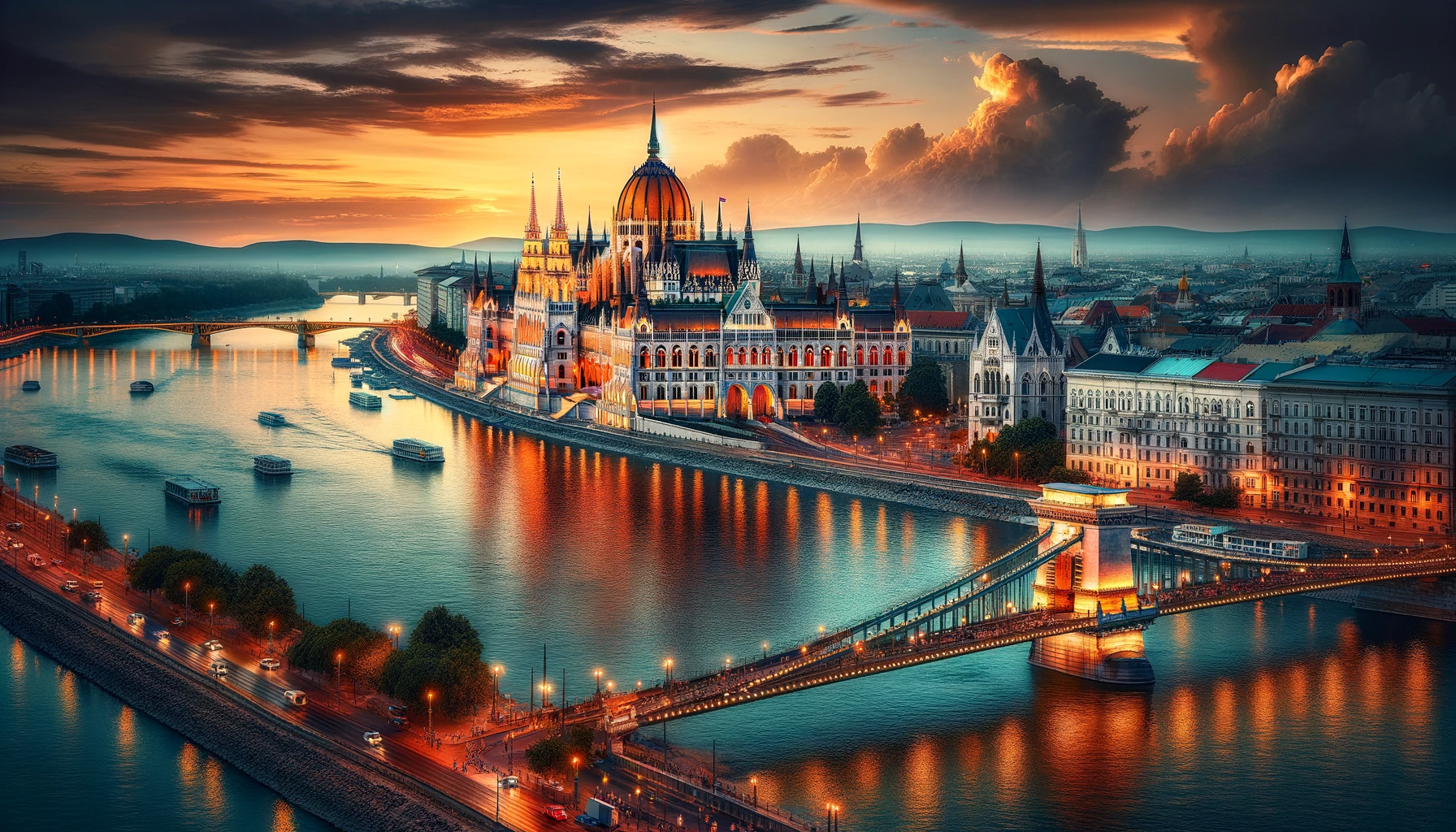
Hungary is a nation with a deep historical legacy, rich cultural traditions, and a dynamic modern society. It continues to play a significant role in Central Europe, balancing its rich past with contemporary development.
- New Year's Day Újév 🔥 Long weekend — take off Friday, Jan 2
- National Day Az 1848-as forradalom ünnepe
- Easter Sunday Húsvétvasárnap
- Easter Monday Húsvéthétfő
- Labour Day A munka ünnepe
- Pentecost Pünkösdvasárnap
- Whit Monday Pünkösdhétfő
- State Foundation Day Az államalapítás ünnepe 🔥 Long weekend — take off Friday, Aug 21
- National Day Az 1956-os forradalom ünnepe
- All Saints' Day Mindenszentek
- Christmas Day Karácsony
- Boxing Day Karácsony másnapja
- New Year's Day Újév
- National Day Az 1848-as forradalom ünnepe
- Easter Sunday Húsvétvasárnap
- Easter Monday Húsvéthétfő
- Labour Day A munka ünnepe
- Pentecost Pünkösdvasárnap
- Whit Monday Pünkösdhétfő
- State Foundation Day Az államalapítás ünnepe
- National Day Az 1956-os forradalom ünnepe
- All Saints' Day Mindenszentek
- Christmas Day Karácsony
- Boxing Day Karácsony másnapja
Frequently Asked Questions
- How many public holidays does Hungary have in 2026?
-
Hungary has 12 official public holidays in 2026.
- How many public holidays does Hungary have in 2027?
-
Hungary has 12 official public holidays in 2027.
- What is the next public holiday in Hungary?
-
The next public holiday in Hungary is Easter Sunday on April 5, 2026 (in 19 days).
- How many long weekends can you get in Hungary in 2026?
-
In 2026, Hungary has 2 public holidays falling on a Tuesday or Thursday, creating potential long weekend opportunities by taking one extra day off.
- Which public holidays in Hungary fall on a weekend in 2026?
-
In 2026, the following public holidays fall on a Saturday or Sunday: National Day, Easter Sunday, Pentecost, All Saints' Day, Boxing Day.
- Which public holidays in Hungary fall on a weekend in 2027?
-
In 2027, the following public holidays fall on a Saturday or Sunday: Easter Sunday, Labour Day, Pentecost, National Day, Christmas Day, Boxing Day.
List of National and Public Holidays in Hungary for the year 2025
- New Year’s Day is on Wednesday, January 1st.
- Revolution Day is on Saturday, March 15th.
- Good Friday is on Friday, April 18th.
- Easter Monday is on Monday, April 21st.
- Labour Day is on Thursday, May 1st.
- Whit Monday is on Monday, June 9th.
- Saint Stephen’s Day is on Wednesday, August 20th.
- Republic Day is on Thursday, October 23rd.
- All Saints’ Day is on Saturday, November 1st.
- Christmas Day is on Thursday, December 25th.
- 2nd Day of Christmas is on Friday, December 26th.
This list reflects the major public holidays observed in Hungary.
- Revolution Day: Commemorates the Hungarian Revolution of 1848.
- Saint Stephen’s Day: Celebrates the founding of the Hungarian Kingdom.
- Republic Day: Commemorates the establishment of the Hungarian Republic in 1956.
Please Note: This list may be subject to change.
List of National and Public Holidays in Hungary for the year 2024
- New Year’s Day – Monday, 1. January 2024
- Revolution Day – Friday, 15. March 2024
- Good Friday – Friday, 29. March 2024
- Easter Monday – Monday, 1. April 2024
- Labour Day – Wednesday, 1. May 2024
- Whit Monday – Monday, 20. May 2024
- Saint Stephen’s Day – Tuesday, 20 August 2024
- Republic Day – Wednesday, 23. October 2024
- All Saints’ Day – Friday, 1. November 2024
- Christmas Day – Wednesday, 25. December 2024
- 2nd Day of Christmas – Thursday, 26. December 2024
History
- Early History and Settlement: Inhabited since ancient times, Hungary’s history is notably shaped by the Magyar tribes who settled in the Carpathian Basin in the 9th century.
- Kingdom of Hungary: Became a Christian kingdom under King Stephen I in the year 1000. A regional power during the medieval era.
- Ottoman Rule and Habsburg Monarchy: Partially occupied by the Ottomans in the 16th century, later became part of the Austro-Hungarian Empire until World War I.
- 20th Century: Post-World War I Treaty of Trianon led to significant territorial losses. World War II and subsequent Soviet influence defined its mid-20th-century history.
- Transition to Democracy: Following the fall of communism in 1989, Hungary transitioned to a market economy and parliamentary democracy.
Geography
- Location: Landlocked in Central Europe, bordered by Austria, Slovakia, Ukraine, Romania, Serbia, Croatia, and Slovenia.
- Landscape: Dominated by the Great Hungarian Plain in the east, hills and mountains to the north, and the Lake Balaton region.
- Danube and Tisza Rivers: Major rivers that are integral to Hungary’s geography and economy.
Culture
- Cultural Identity: Rich cultural heritage influenced by various ethnic groups and conquerors throughout its history.
- Folk Traditions and Festivals: Known for vibrant folk traditions, including music, dance, and festivals that celebrate Hungarian culture and history.
- Cuisine: Hungarian cuisine is famous for its flavors and spices, particularly the use of paprika. Notable dishes include goulash, pörkölt (stew), and lángos (fried dough).
Economy
- Post-Communist Economy: Transitioned from a centrally planned economy to a market-driven one, with significant growth in sectors like manufacturing, IT, and services.
- Agriculture: Historically an agrarian economy, with fertile soils and a favorable climate. Major products include wheat, corn, sunflower oil, and wine.
- Tourism: A growing sector, with Budapest, thermal baths, and the Danube River as major attractions.
Society
- Demographics: Predominantly ethnic Hungarians, with minority groups including Roma, Germans, and others.
- Urbanization: Budapest, the capital and largest city, is a cultural and economic center. Other major cities include Debrecen, Szeged, and Pécs.
- Education and Healthcare: Hungary has a well-developed education system and universal healthcare, with ongoing reforms and modernization efforts.
Environmental Focus
- Natural Resources and Conservation: Rich in biodiversity, with national parks and protected areas like Hortobányi National Park and the Danube Drava National Park.
- Environmental Challenges: Facing challenges like water management, pollution, and the impacts of climate change.
Infrastructure and Technology
- Transport and Infrastructure: Well-developed infrastructure with an extensive road and railway network. Ongoing investments in public transportation and road development.
- Technology and Innovation: Rapid growth in the technology sector, with a focus on IT, telecommunications, and innovation.
Traditional Festivals and Celebrations
- Cultural Festivities: Hosts numerous traditional festivals, including Easter celebrations, wine festivals, and the Budapest Spring Festival.
International Relations
- EU Membership: Joined the European Union in 2004, playing an active role in European affairs.
- Global Partnerships: Engages in international diplomacy, balancing its historical ties with neighboring countries and broader global partnerships.
