
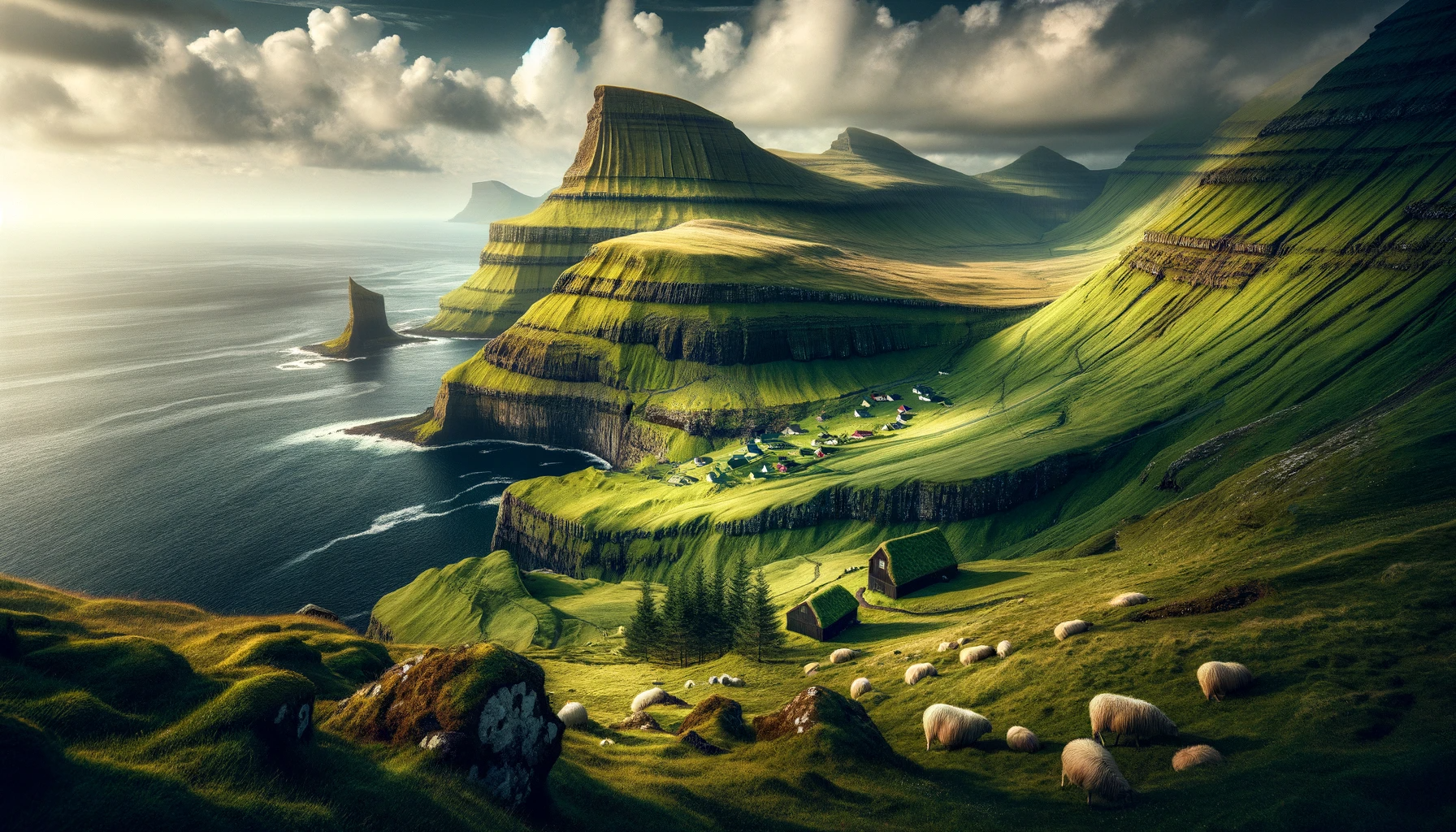
The Faroe Islands, an archipelago under the Kingdom of Denmark, are nestled in the North Atlantic Ocean. Known for their rugged terrain, grass-roofed houses, and a rich maritime culture, these islands are a haven of tranquility and natural beauty. The dramatic landscapes, from steep cliffs and deep fjords to a profusion of birdlife, make the Faroe Islands a unique destination for nature enthusiasts and those seeking solitude amidst unspoiled surroundings.
- New Year's Day Nýggjár 🔥 Long weekend
- Maundy Thursday Skírhvítudagur
- Good Friday Langifríggjadagur
- Easter Sunday Páskadagur
- Easter Monday Annar páskadagur
- First Day of Summer Sumardagurinn fyrsti
- Workers' Day Vinnuvøkudagur
- Ascension Day Kristi Himmelferðardagur 🔥 Long weekend
- Pentecost Hvítasunnudagur
- Whit Monday Annar hvítasunnudagur
- Ólavsøka Eve Ólavsøka 🔥 Long weekend
- Ólavsøka Day Ólavsøkudagur
- Christmas Eve Jólaftan
- Christmas Day Jóladagur
- Boxing Day Annar jóladagur
- New Year's Day Nýggjár
- Maundy Thursday Skírhvítudagur
- Good Friday Langifríggjadagur
- Easter Sunday Páskadagur
- Easter Monday Annar páskadagur
- First Day of Summer Sumardagurinn fyrsti
- Workers' Day Vinnuvøkudagur
- Ascension Day Kristi Himmelferðardagur 🔥 Long weekend
- Pentecost Hvítasunnudagur
- Whit Monday Annar hvítasunnudagur
- Ólavsøka Eve Ólavsøka
- Ólavsøka Day Ólavsøkudagur 🔥 Long weekend
- Christmas Eve Jólaftan
- Christmas Day Jóladagur
- Boxing Day Annar jóladagur
Frequently Asked Questions
-
Faroe Islands has 15 official public holidays in 2026.
-
Faroe Islands has 15 official public holidays in 2027.
-
The next public holiday in Faroe Islands is Christmas Eve on December 24, 2026 (in 91 days).
-
In 2026, Faroe Islands has 3 public holidays where taking just one extra day off creates a long weekend.
-
In 2027, Faroe Islands has 2 public holidays where taking just one extra day off creates a long weekend.
-
In 2026, the following public holidays fall on a Saturday or Sunday (the weekend in Faroe Islands): Easter Sunday, Pentecost, Boxing Day.
-
In 2027, the following public holidays fall on a Saturday or Sunday (the weekend in Faroe Islands): Easter Sunday, Workers' Day, Pentecost, Christmas Day, Boxing Day.
List of National and Public Holidays in the year 2025
- New Year’s Day is on Wednesday, January 1st.
- Maundy Thursday is on Thursday, April 17th.
- Good Friday is on Friday, April 18th.
- Easter Sunday is on Sunday, April 20th.
- Easter Monday is on Monday, April 21st.
- Flag Day is on Friday, April 25th.
- Prayer Day is on Friday, May 16th.
- Ascension Day is on Thursday, May 29th.
- Constitution Day is on Thursday, June 5th.
- Whit Sunday is on Sunday, June 8th.
- Whit Monday is on Monday, June 9th.
- St. Olav’s Eve is on Sunday, July 28th.
- St. Olav’s Day is on Monday, July 29th.
- Christmas Eve is on Wednesday, December 24th.
- Christmas Day is on Thursday, December 25th.
- Boxing Day is on Friday, December 26th.
- New Year’s Eve is on Wednesday, December 31st.
This list reflects the major public holidays observed in Norway.
- Flag Day: Celebrates the Norwegian Constitution.
- Prayer Day: A day of national prayer.
- Constitution Day: Celebrates the adoption of the Norwegian Constitution in 1814.
- St. Olav’s Day: Celebrates the patron saint of Norway.

Faroe Islands: A Hidden Gem in the North Atlantic
Introduction
The Faroe Islands, an archipelago under the sovereignty of the Kingdom of Denmark, are known for their dramatic landscapes, rich cultural heritage, and a strong sense of community. Situated between Iceland and Norway, these islands are a haven for nature lovers and those seeking tranquility.
Historical Overview
The history of the Faroe Islands is a tapestry of Norse and Viking influences. First settled by Irish monks in the 6th century and later by Norse Vikings, these islands have a rich saga that is integral to their identity. Over the centuries, the Faroese have maintained a distinct culture and language, Faroese, which is closely related to Icelandic and Old Norse.
Geography of Faroe Islands
Comprising 18 rocky, volcanic islands connected by road tunnels, ferries, causeways, and bridges, the Faroe Islands’ landscape is characterized by steep cliffs, tall mountains, narrow fjords, and a rugged coastline. The islands’ unique geographical position makes them a perfect spot for hiking, bird watching, and experiencing nature in its rawest form.


Cultural Richness
Faroese culture is deeply rooted in its Norse heritage, visible in its traditional music, dance, and folklore. The islands have their own unique traditions and a thriving music scene. The Faroese chain dance, a medieval ring dance accompanied by ballads, is a significant cultural element.
Economy and Livelihood
The economy of the Faroe Islands is primarily based on fishing and aquaculture, with fish products accounting for the majority of their export income. In recent years, there has been a growing emphasis on developing tourism, technology, and sustainable energy resources.
Political Framework
While the Faroe Islands are part of the Kingdom of Denmark, they enjoy extensive autonomy. They have their own government, the Løgting, a parliament established in the 9th century, and control most of their domestic affairs. Issues like foreign policy and defense are handled by Denmark.
Society and Lifestyle
The Faroese society is known for its strong community bonds, low crime rate, and high standard of living. The population is spread across many small villages, with Tórshavn as the capital and largest city. The unique way of life in the Faroe Islands is a blend of traditional and modern lifestyles.
Art and Literature
Faroese art and literature are influenced by the islands’ natural beauty and cultural heritage. The Faroe Islands have produced notable artists and writers who often draw inspiration from the local landscape and folklore. The islands also host various festivals and cultural events that showcase their rich artistic traditions.
Natural Beauty and Tourism
Tourism in the Faroe Islands is growing, with visitors drawn to its unspoiled natural beauty. Key attractions include the Vestmanna Bird Cliffs, the picturesque village of Gásadalur, and the historical Kirkjubøur. Responsible and sustainable tourism is a focus to preserve the islands’ natural environment.
Global Interaction
Though geographically isolated, the Faroe Islands are actively engaged in international trade, particularly in seafood exports. They are not part of the European Union but have trade agreements that facilitate economic relations with EU member states and other countries.
Challenges and Future Prospects
The Faroe Islands face challenges related to environmental sustainability, economic diversification, and maintaining their cultural identity in a rapidly changing world. Efforts are being made to balance economic growth with environmental conservation and to promote the islands as a unique tourist destination.
Conclusion
The Faroe Islands offer a glimpse into a world where nature’s majesty is on full display and where traditional culture harmoniously coexists with modern life. As a unique destination with much to offer, the Faroe Islands continue to enchant and captivate those who visit their shores.
More information at https://visitfaroeislands.com/
