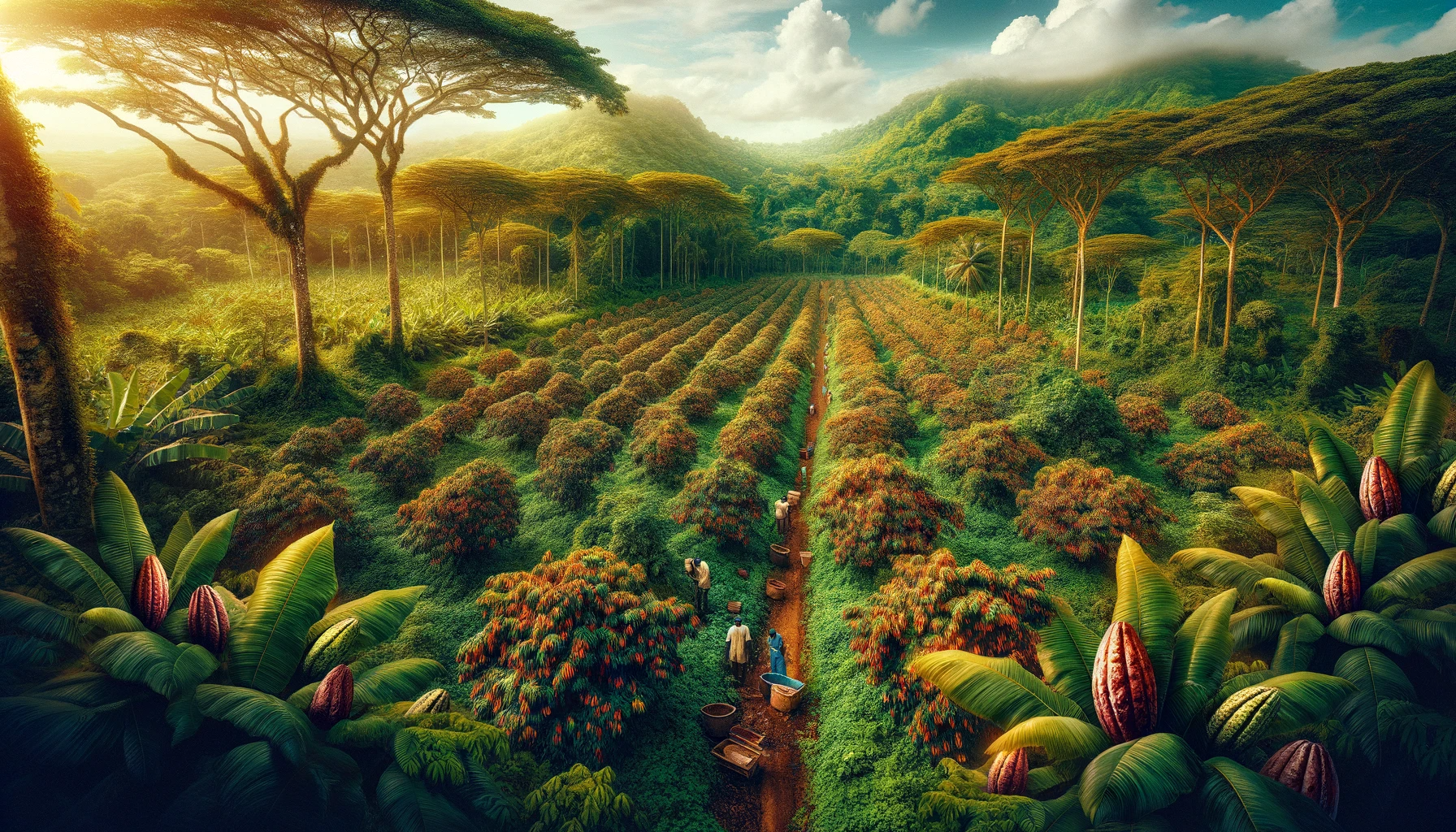
Ivory Coast, or Côte d’Ivoire, located in West Africa, is renowned for being the world’s largest cocoa producer. Its diverse culture, reflected in its music and cuisine, and vibrant economic center, Abidjan, contrast with tranquil beaches and lush rainforests. This nation blends natural beauty with a bustling urban landscape.
- New Year's Day Jour de l'An 🔥 Long weekend
- Eid al-Fitr Aïd el-Fitr
- Eid al-Fitr Holiday Aïd el-Fitr (2ème jour)
- Easter Monday Lundi de Pâques
- Labour Day Fête du Travail
- Ascension Day Ascension 🔥 Long weekend
- Whit Monday Lundi de Pentecôte
- Eid al-Adha Aïd el-Adha
- Eid al-Adha Holiday Aïd el-Adha (2ème jour) 🔥 Long weekend
- Islamic New Year Ras as-Sanah al-Hijriyah 🔥 Long weekend
- Independence Day Fête Nationale
- Assumption of Mary Assomption
- Prophet's Birthday Mawlid an-Nabi 🔥 Long weekend
- All Saints' Day Toussaint
- National Peace Day Fête Nationale de la Paix
- Christmas Day Noël
- New Year's Day Jour de l'An
- Eid al-Fitr Aïd el-Fitr 🔥 Long weekend
- Eid al-Fitr Holiday Aïd el-Fitr (2ème jour)
- Easter Monday Lundi de Pâques
- Labour Day Fête du Travail
- Ascension Day Ascension 🔥 Long weekend
- Eid al-Adha Aïd el-Adha
- Eid al-Adha Holiday Aïd el-Adha (2ème jour)
- Whit Monday Lundi de Pentecôte
- Islamic New Year Ras as-Sanah al-Hijriyah
- Independence Day Fête Nationale
- Assumption of Mary Assomption
- Prophet's Birthday Mawlid an-Nabi
- All Saints' Day Toussaint
- National Peace Day Fête Nationale de la Paix
- Christmas Day Noël
Frequently Asked Questions
-
Ivory Coast has 16 official public holidays in 2026.
-
Ivory Coast has 16 official public holidays in 2027.
-
The next public holiday in Ivory Coast is Assumption of Mary on August 15, 2026 (in 5 days).
-
In 2026, Ivory Coast has 5 public holidays falling on a Tuesday or Thursday, creating potential long weekend opportunities by taking one extra day off.
-
In 2027, Ivory Coast has 2 public holidays falling on a Tuesday or Thursday, creating potential long weekend opportunities by taking one extra day off.
-
In 2026, the following public holidays fall on a Saturday or Sunday: Eid al-Fitr Holiday, Assumption of Mary, All Saints' Day, National Peace Day.
-
In 2027, the following public holidays fall on a Saturday or Sunday: Labour Day, Eid al-Adha, Islamic New Year, Independence Day, Assumption of Mary, Prophet's Birthday, Christmas Day.
List of National and Public Holidays in Ivory Coast for the year 2025
- New Year’s Day is on Wednesday, 1st January 2025.
- Day after Laylat al-Qadr is on Monday, 17th March 2025.
- Day after Laylat al-Qadr is on Friday, 28th March 2025.
- Eid al-Fitr is on Sunday, 30th March 2025.
- Easter Monday is on Monday, 21st April 2025.
- Labour Day is on Thursday, 1st May 2025.
- Ascension Day is on Thursday, 29th May 2025.
- Eid al-Adha is on Friday, 6th June 2025.
- Whit Monday is on Monday, 9th June 2025.
- Independence Day is on Thursday, 7th August 2025.
- Assumption Day is on Friday, 15th August 2025.
- The Day after the Prophet’s Birthday is on Friday, 5th September 2025.
- All Saints’ Day is on Saturday, 1st November 2025.
- National Peace Day is on Saturday, 15th November 2025.
- Christmas Day is on Thursday, 25th December 2025.
History
- Early Inhabitants: Historically, the area now known as Ivory Coast was inhabited by various ethnic groups, each establishing distinct kingdoms and societies.
- Colonial Era: Became a protectorate of France in 1843 and a French colony in 1893. The French colonial period saw the introduction of new economic structures and the forced labor system.
- Independence: Gained independence from France in 1960, with Félix Houphouët-Boigny as its first president, leading to a period of economic prosperity and political stability.
- Recent History: Since the late 1990s, the country has experienced periods of political instability, civil war, and conflict, primarily due to issues related to national identity, ethnicity, and economic disparities.
Geography
- Location: Located in West Africa, bordered by Liberia, Guinea, Mali, Burkina Faso, Ghana, and the Atlantic Ocean.
- Terrain and Climate: Features a varied landscape including beaches, lagoons, and a forested interior. The country has a tropical climate with a wet and dry season.
- Natural Resources: Rich in natural resources, including cocoa, coffee, palm oil, cotton, and petroleum.

Culture
- Ethnic Diversity: Home to over 60 ethnic groups, the largest being the Akan, Krou, Mandé, and Gurs. This diversity is reflected in the country’s languages, traditions, and cultural practices.
- Languages: French is the official language. Indigenous languages such as Baoulé, Dioula, and Bété are also widely spoken.
- Religions: A religiously diverse nation with Islam, Christianity, and indigenous beliefs.
- Arts and Music: Known for its vibrant music scene, including genres like Zouglou and Coupé-Décalé, and its rich tradition in art and craftsmanship.
Economy
- Agricultural Dominance: The world’s largest producer of cocoa and a major producer of coffee and palm oil. Agriculture remains the backbone of the economy.
- Industrial and Service Sectors: Has a growing industrial sector, including food processing, and a developing service sector.
- Challenges: Faces challenges like income inequality, dependence on global commodity prices, and the need for economic diversification.
Politics
- Government Structure: A presidential republic with a multi-party system. The President is the head of state, and the Prime Minister is the head of government.
- Political Landscape: Post-independence, the country experienced stability under a single-party system but later shifted to a multi-party system in the 1990s, which has seen periodic tensions and conflicts.
- Legal System: Based on the French civil law system and customary law.
Society
- Population: A mix of indigenous people and immigrants from neighboring countries, contributing to its cultural and linguistic diversity.
- Health and Education: Struggles with issues like access to quality healthcare and education, although there have been significant improvements in recent years.
- Urbanization: Rapid urbanization, with major cities like Abidjan and Yamoussoukro (the political capital) being centers of economic and administrative activity.
Science and Technology
- Research and Development: Limited but growing focus on research, particularly in agriculture and health.
- Technology Adoption: Increasing use of digital technology in urban areas, with growth in mobile phone usage and internet access.
Arts and Literature
- Literary Scene: A rich literary tradition with authors like Ahmadou Kourouma and Marguerite Abouet, often exploring themes of colonialism, identity, and social change.
- Visual Arts: Known for its diverse artistic heritage, including sculpture, painting, and mask-making, reflecting the country’s ethnic and cultural diversity.
Sports
- Popular Sports: Football is the most popular sport, with the national team, Les Éléphants, being a prominent force in African football.
- Other Sports: Enthusiasm for basketball, athletics, and rugby is growing, with participation in both national and international competitions.
International Relations
- Foreign Policy: Active in regional and international affairs, particularly within the African Union and the Economic Community of West African States (ECOWAS).
- Economic and Diplomatic Relations: Maintains strong economic ties with France and other European countries, as well as with the United States, China, and various African nations.
Challenges and Prospects
- Economic Development: Focused on diversifying the economy beyond agriculture, improving infrastructure, and encouraging foreign investment.
- Political Stability and Governance: Efforts towards maintaining political stability, promoting good governance, and ensuring a peaceful democratic process are key.
- Social Issues: Addressing poverty, healthcare, education, and ethnic tensions are essential for the nation’s progress and stability.
In summary, Ivory Coast is a country with a complex history, rich cultural diversity, and significant economic potential. Despite challenges related to political stability and social disparities, it remains a key player in West Africa, with opportunities for growth and development in various sectors. The country’s future hinges on its ability to balance economic advancement with social inclusion and political harmony.
