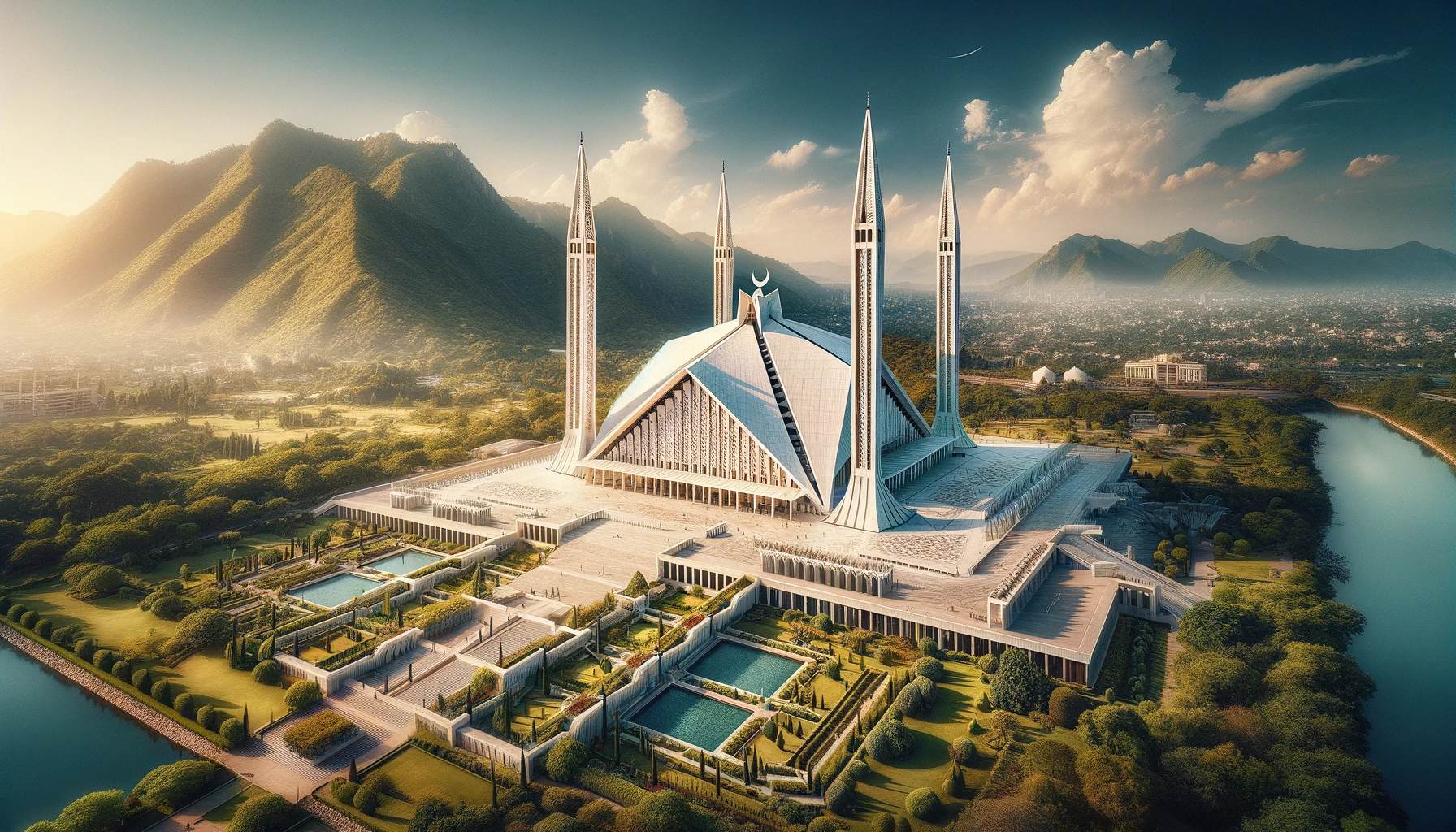
Pakistan is a nation with a rich historical background, diverse cultural heritage, and significant geopolitical relevance. It continues to navigate challenges in its journey towards sustainable development and socio-economic stability.
- Kashmir Day یوم یکجہتی کشمیر 🔥 Long weekend — take off Friday, Feb 6
- Eid al-Fitr عید الفطر
- Eid al-Fitr Holiday عید الفطر
- Eid al-Fitr Holiday عید الفطر
- Pakistan Day یوم پاکستان
- Labour Day یوم مزدور
- Eid al-Adha عید الاضحی
- Eid al-Adha Holiday عید الاضحی 🔥 Long weekend — take off Friday, May 29
- Eid al-Adha Holiday عید الاضحی
- Ashura عاشورہ 🔥 Long weekend — take off Monday, Jun 15
- Independence Day یوم آزادی
- Prophet's Birthday عید میلاد النبی 🔥 Long weekend — take off Monday, Aug 24
- Iqbal Day یوم اقبال
- Christmas / Quaid Day کرسمس / یوم قائد
- Kashmir Day یوم یکجہتی کشمیر
- Eid al-Fitr عید الفطر 🔥 Long weekend — take off Monday, Mar 8
- Eid al-Fitr Holiday عید الفطر
- Eid al-Fitr Holiday عید الفطر 🔥 Long weekend — take off Friday, Mar 12
- Pakistan Day یوم پاکستان 🔥 Long weekend — take off Monday, Mar 22
- Labour Day یوم مزدور
- Eid al-Adha عید الاضحی
- Eid al-Adha Holiday عید الاضحی
- Eid al-Adha Holiday عید الاضحی 🔥 Long weekend — take off Monday, May 17
- Ashura عاشورہ
- Independence Day یوم آزادی
- Prophet's Birthday عید میلاد النبی
- Iqbal Day یوم اقبال 🔥 Long weekend — take off Monday, Nov 8
- Christmas / Quaid Day کرسمس / یوم قائد
Frequently Asked Questions
- How many public holidays does Pakistan have in 2026?
-
Pakistan has 14 official public holidays in 2026.
- How many public holidays does Pakistan have in 2027?
-
Pakistan has 14 official public holidays in 2027.
- What is the next public holiday in Pakistan?
-
The next public holiday in Pakistan is Eid al-Fitr on March 20, 2026 (in 3 days).
- How many long weekends can you get in Pakistan in 2026?
-
In 2026, Pakistan has 4 public holidays falling on a Tuesday or Thursday, creating potential long weekend opportunities by taking one extra day off.
- How many long weekends can you get in Pakistan in 2027?
-
In 2027, Pakistan has 5 public holidays falling on a Tuesday or Thursday, creating potential long weekend opportunities by taking one extra day off.
- Which public holidays in Pakistan fall on a weekend in 2026?
-
In 2026, the following public holidays fall on a Saturday or Sunday: Eid al-Fitr Holiday, Eid al-Fitr Holiday.
- Which public holidays in Pakistan fall on a weekend in 2027?
-
In 2027, the following public holidays fall on a Saturday or Sunday: Labour Day, Eid al-Adha, Ashura, Independence Day, Prophet's Birthday, Christmas / Quaid Day.
List of National and Public Holidays for Pakistan in the year 2025
- Kashmir Day is on Wednesday, February 5th.
- Pakistan Day is on Sunday, March 23rd.
- Eid ul-Fitr is on Sunday, March 30th.
- Eid ul-Fitr Holiday is on Monday, March 31st.
- Eid ul-Fitr Holiday is on Tuesday, April 1st.
- Easter Monday is on Monday, April 21st.
- Labour Day is on Thursday, May 1st.
- Youm-e-Takbeer is on Wednesday, May 28th.
- Eid ul-Azha is on Saturday, June 7th.
- Eid ul-Azha Holiday is on Sunday, June 8th.
- Eid ul-Azha Holiday is on Monday, June 9th.
- Ashura is on Saturday, July 5th.
- Ashura is on Sunday, July 6th.
- Independence Day is on Thursday, August 14th.
- Milad un-Nabi is on Friday, September 5th.
- Iqbal Day is on Sunday, November 9th.
- Christmas Day is on Thursday, December 25th.
- Quiad-e-Azam Day is on Thursday, December 25th.
- Day after Christmas is on Friday, December 26th.
*Please note that this list may be subject to change.
Important Note:
- Quiad-e-Azam Day and Christmas Day both fall on the same date, December 25th.
List of National and Public Holidays for Pakistan in the year 2024
- Kashmir Day: Monday, 5 February 2024
- Pakistan Day: Saturday, 23 March 2024
- Easter Monday: Monday, 1 April 2024 (Note: Easter Monday is not a public holiday in Pakistan, but it’s mentioned in the list)
- Eid ul-Fitr: Wednesday, 10 April 2024
- 2. Eid ul-Fitr Holiday: Thursday, 11 April 2024
- 3. Eid ul-Fitr Holiday: Friday, 12 April 2024
- Labour Day: Wednesday, 1 May 2024
- Eid ul-Azha: Monday, 17 June 2024
- 2. Eid ul-Azha Holiday: Tuesday, 18 June 2024
- 3. Eid ul-Azha Holiday: Wednesday, 19 June 2024
- Ashura: Tuesday, 16 July 2024
- 2. Ashura: Wednesday, 17 July 2024
- Independence Day: Wednesday, 14 August 2024
- Milad un-Nabi: Monday, 16 September 2024
- Iqbal Day: Saturday, 9 November 2024
- Christmas Day: Wednesday, 25 December 2024
- Quaid-e-Azam Day: Wednesday, 25 December 2024
- Boxing Day: Thursday, 26 December 2024
Please note that some holidays may be observed based on the Islamic lunar calendar and may vary slightly depending on moon sighting

History
- Early Civilizations: Home to ancient civilizations like the Indus Valley Civilization.
- Islamic and Colonial Era: Became a part of various Islamic empires and later, the British Empire.
- Independence and Partition: Gained independence from British India in 1947, leading to the creation of Pakistan as a separate nation for Muslims.
- Military and Democratic Rule: Pakistan’s history has been marked by periods of military rule interspersed with democratic governments.
Geography
- Location: Located in South Asia, sharing borders with India, Afghanistan, Iran, and China.
- Terrain: Features diverse landscapes including the mountain ranges of the Himalayas and Karakoram, the Indus River plains, and the Arabian Sea coastline.
- Climate: Varies from arctic in the north to tropical in the south.
Culture
- Ethnic and Linguistic Diversity: Home to various ethnic groups like Punjabis, Sindhis, Pashtuns, and Baloch. Urdu is the national language, with numerous regional languages like Punjabi, Pashto, and Sindhi.
- Rich Heritage: Known for its rich literary and musical traditions, including Sufi music and poetry.
- Cuisine: Pakistani cuisine is known for its richness and flavor, with dishes like biryani, nihari, and kebabs.
Economy
- Agriculture-Based: Major crops include wheat, rice, and cotton. Agriculture is a significant part of the economy.
- Industrial Growth: Industries like textiles, pharmaceuticals, and technology are growing.
- Challenges: Faces challenges like inflation, poverty, and a need for economic diversification.
Politics
- Government Structure: A federal parliamentary republic with a president as the head of state and a prime minister as the head of government.
- Political Landscape: Characterized by a multi-party system. The political environment is often influenced by the military.
- Foreign Relations: Has significant strategic and military ties, particularly with China and the United States.
Society
- Population: One of the world’s most populous countries, with a young demographic.
- Social Issues: Struggles with issues such as education disparity, healthcare access, and women’s rights.
- Urbanization: Rapid urbanization, with major cities like Karachi, Lahore, and Islamabad.
Science and Technology
- Advancements: Made significant strides in fields like nuclear technology, telecommunications, and information technology.
- Education and Research: Focused on improving higher education and research facilities.
Arts and Literature
- Literary Contributions: Rich tradition in Urdu literature with poets like Allama Iqbal and Faiz Ahmed Faiz.
- Visual and Performing Arts: Has a growing film industry, known as Lollywood, and a strong tradition in painting and crafts.
Sports
- Cricket: Cricket is the most popular sport, with a strong national team.
- Other Sports: Also participates in hockey, squash, and other sports.
International Relations
- Global Diplomacy: Active in international diplomacy, with a focus on regional stability, counter-terrorism, and economic cooperation.
- Challenges: Balances its foreign relations with neighboring India and Afghanistan, often marked by geopolitical tensions.
Environmental Concerns
- Challenges: Faces environmental issues like deforestation, water scarcity, and air pollution.
- Conservation Efforts: Initiatives in wildlife conservation and sustainable development are underway.
Challenges and Prospects
- Economic Growth and Stability: Working towards sustainable economic growth and political stability.
- Social Reforms: Focused on improving social conditions, healthcare, education, and women’s empowerment.
- Environmental Sustainability: Increasing focus on environmental protection and sustainable practices.
