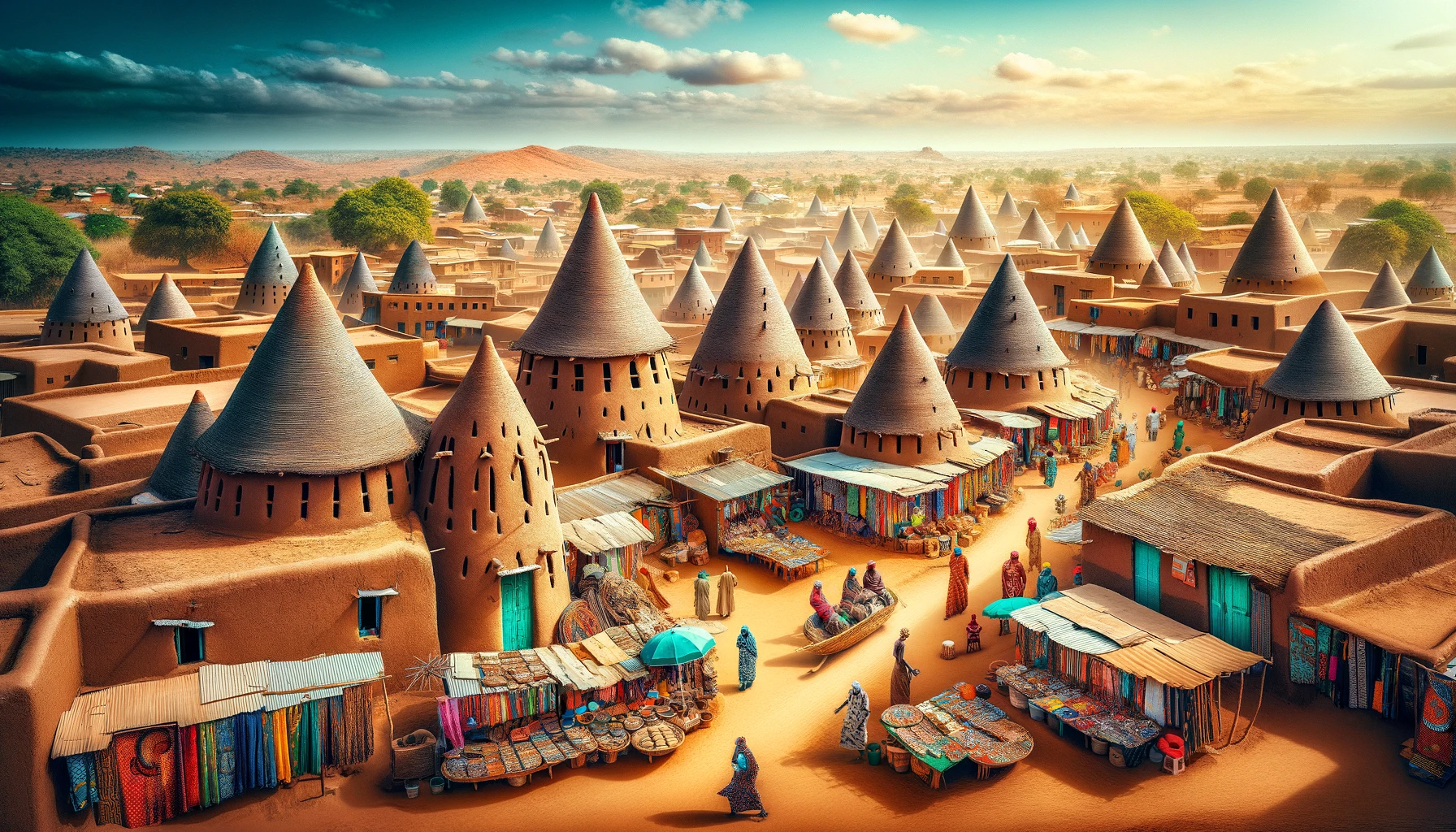
Burkina Faso is a country rich in cultural diversity and history, with a resilient population navigating through various economic and developmental challenges. It continues to strive towards sustainable development and political stability in a complex regional context.
- New Year's Day Jour de l'An 🔥 Long weekend
- Revolution Day Fête de la Révolution
- International Women's Day Journée Internationale de la Femme
- Eid al-Fitr Aïd el-Fitr
- Easter Monday Lundi de Pâques
- Labour Day Fête du Travail
- Ascension Day Ascension 🔥 Long weekend
- Whit Monday Lundi de Pentecôte
- Eid al-Adha Aïd el-Adha
- Independence Day Fête Nationale
- Assumption of Mary Assomption
- Prophet's Birthday Mawlid an-Nabi 🔥 Long weekend
- All Saints' Day Toussaint
- Republic Day Proclamation de la République
- Christmas Day Noël
- New Year's Day Jour de l'An
- Revolution Day Fête de la Révolution
- International Women's Day Journée Internationale de la Femme
- Eid al-Fitr Aïd el-Fitr 🔥 Long weekend
- Easter Monday Lundi de Pâques
- Labour Day Fête du Travail
- Ascension Day Ascension 🔥 Long weekend
- Eid al-Adha Aïd el-Adha
- Whit Monday Lundi de Pentecôte
- Independence Day Fête Nationale 🔥 Long weekend
- Assumption of Mary Assomption
- Prophet's Birthday Mawlid an-Nabi
- All Saints' Day Toussaint
- Republic Day Proclamation de la République
- Christmas Day Noël
Frequently Asked Questions
-
Burkina Faso has 15 official public holidays in 2026.
-
Burkina Faso has 15 official public holidays in 2027.
-
The next public holiday in Burkina Faso is Assumption of Mary on August 15, 2026 (in 5 days).
-
In 2026, Burkina Faso has 3 public holidays falling on a Tuesday or Thursday, creating potential long weekend opportunities by taking one extra day off.
-
In 2027, Burkina Faso has 3 public holidays falling on a Tuesday or Thursday, creating potential long weekend opportunities by taking one extra day off.
-
In 2026, the following public holidays fall on a Saturday or Sunday: Revolution Day, International Women's Day, Assumption of Mary, All Saints' Day.
-
In 2027, the following public holidays fall on a Saturday or Sunday: Revolution Day, Labour Day, Eid al-Adha, Assumption of Mary, Prophet's Birthday, Republic Day, Christmas Day.
List of National and Public Holidays in Burkina Faso for the year 2026
- New Year’s Day is on 1st January, Thursday.
- Revolution Day is on 3rd January, Saturday.
- International Women’s Day is on 8th March, Sunday.
- International Women’s Day Holiday is on 9th March, Monday.
- Korité is on 20th March, Friday.
- Easter Monday is on 6th April, Monday.
- Labour Day is on 1st May, Friday.
- Ascension Day is on 14th May, Thursday.
- Day of Customs and Traditions is on 15th May, Friday.
- Tabaski is on 27th May, Wednesday.
- Independence Day is on 5th August, Wednesday.
- Assumption Day is on 15th August, Saturday.
- Prophet Muhammad’s Birthday is on 25th August, Tuesday.
- Martyrs’ Day is on 31st October, Saturday.
- All Saints’ Day is on 1st November, Sunday.
- All Saints’ Day Holiday is on 2nd November, Monday.
- Proclamation of Independence Day is on 11th December, Friday.
- Christmas Day is on 25th December, Friday.

History
- Early Empires: The region now known as Burkina Faso was part of several ancient empires, including the Mossi Kingdoms, which were among the most powerful in West Africa.
- Colonial Era: Became part of French West Africa in the late 19th century, known then as Upper Volta.
- Independence: Gained independence from France in 1960. The post-independence period has seen several coups and political upheavals.
- Recent Developments: Contemporary Burkina Faso is working towards political stability and economic development amidst various challenges.
Geography
- Location: Landlocked in West Africa, bordered by Mali, Niger, Benin, Togo, Ghana, and Côte d’Ivoire.
- Terrain and Climate: Characterized by a savanna landscape, with a predominantly semi-arid climate.
- Natural Resources: Rich in natural resources, including gold, manganese, limestone, and marble.
Culture
- Ethnic Diversity: Home to over 60 ethnic groups, each with its own language and culture. The Mossi are the largest ethnic group.
- Traditions and Arts: Rich in traditional arts and crafts, including weaving, wood carving, and bronze casting. Known for its vibrant music and dance traditions.
- Cuisine: Features dishes like tô (a millet-based paste), fufu, and various stews often accompanied by sauces.
Economy
- Agricultural Base: The economy is largely based on agriculture, with cotton being the main cash crop. Subsistence farming remains predominant.
- Challenges: Economic challenges include vulnerability to climate change, political instability, and a need for infrastructure development.
- Growth Sectors: Efforts to diversify the economy are focusing on mining, particularly gold, and improving manufacturing capabilities.
Society
- Population: A young and rapidly growing population, with a mix of urban and rural communities.
- Languages: French is the official language, with indigenous languages such as Mooré, Dioula, and Fulfulde widely spoken.
- Education and Healthcare: Government initiatives are aimed at improving education and healthcare, though challenges in access and quality persist.
Environmental Issues
- Sustainability Challenges: Facing issues like deforestation, desertification, and water scarcity.
- Conservation Efforts: Implementing measures to protect natural resources and promote sustainable agricultural practices.
Government and Politics
- Governance: A republic with a multiparty political system. Recent years have seen efforts towards democratic consolidation.
- Regional Influence: Active in regional organizations such as the Economic Community of West African States (ECOWAS) and the African Union.
Tourism
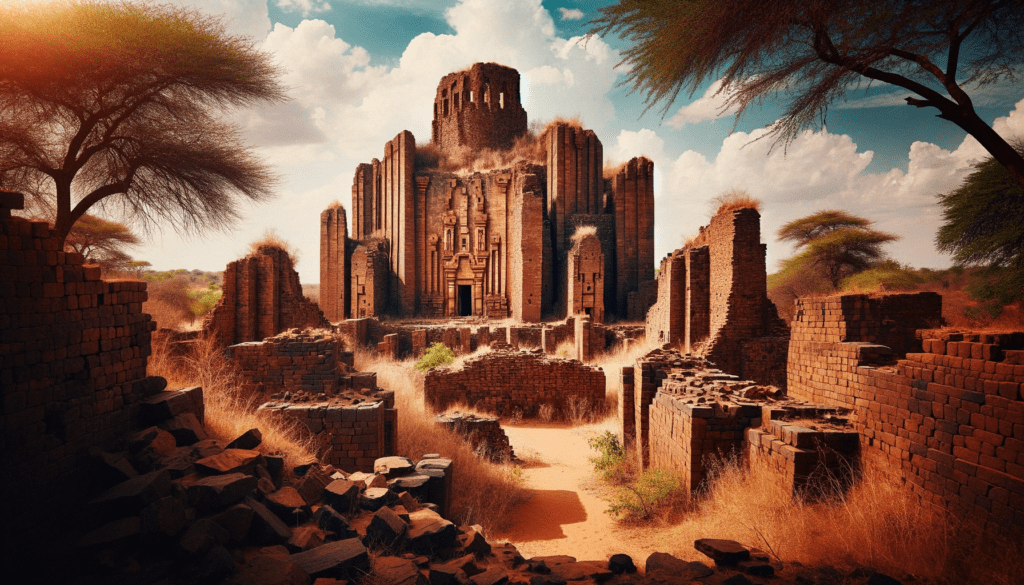
- Cultural and Natural Attractions: Offers unique cultural experiences, including the Ruins of Loropéni (a UNESCO World Heritage Site), and natural attractions like W National Park.
- Festivals: Hosts several cultural festivals, showcasing traditional music, dance, and crafts.
