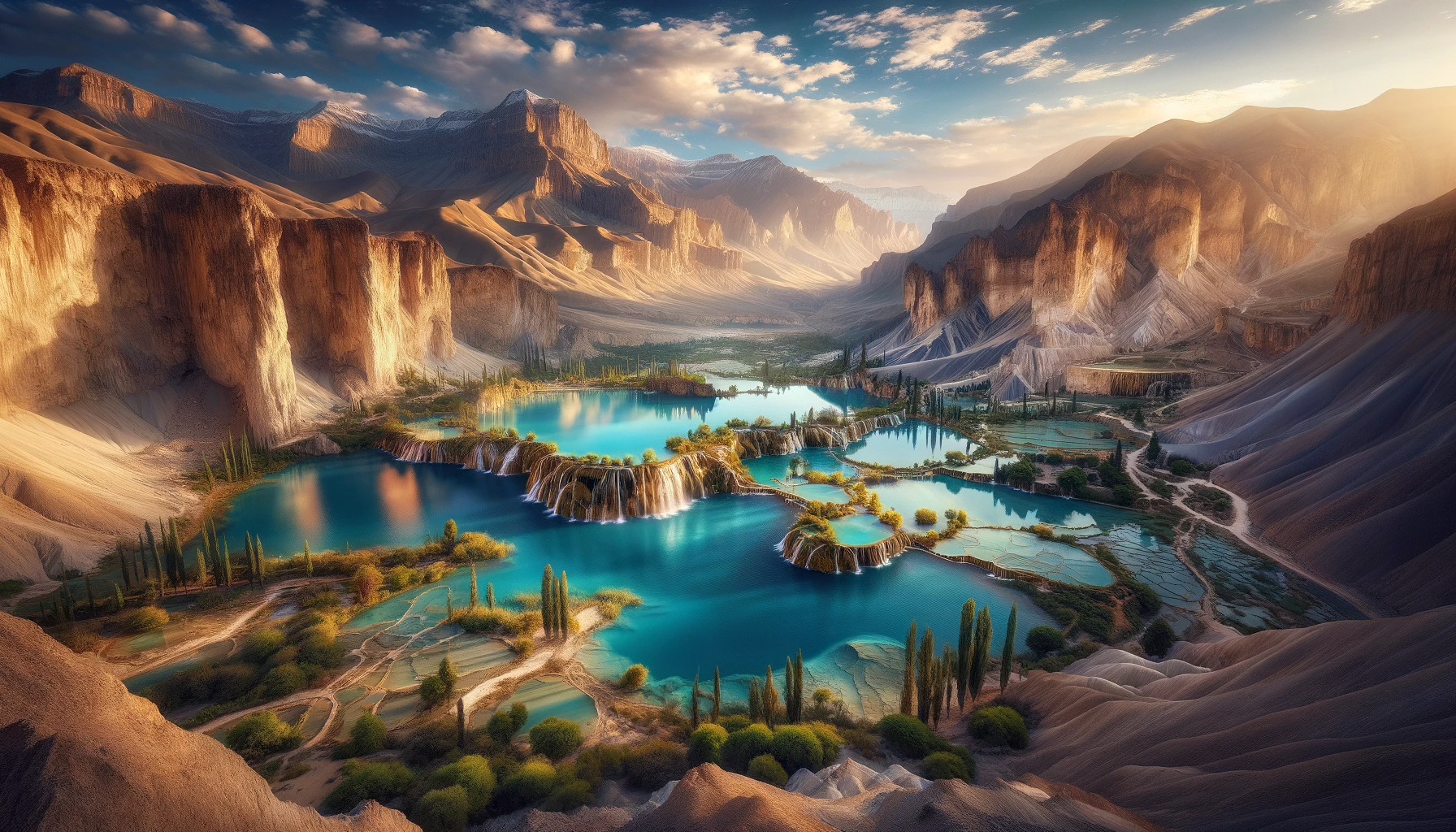
Afghanistan, a landlocked country at the crossroads of Central and South Asia, is known for its rich history and diverse cultural heritage. Influenced by numerous empires and dynasties, it is home to ancient historical sites, including the Minaret of Jam and the remnants of the Buddhas of Bamiyan.
Despite facing significant challenges, Afghanistan’s rugged landscape, encompassing the Hindu Kush mountains and the Khyber Pass, its traditional crafts, and the resilience of its people, make it a nation of profound historical significance and enduring cultural richness.
- Liberation Day روز آزادی
- Eid al-Fitr عید فطر
- Nowruz نوروز
- Mujahideen Victory Day روز پیروزی مجاهدین
- Labour Day روز کارگر
- Eid al-Adha عید اضحی 🔥 Long weekend
- Islamic New Year رأسالسنة الهجرية
- Independence Day روز استقلال 🔥 Long weekend
- Prophet's Birthday عید میلاد النبی
- Martyrs' Day روز شهید 🔥 Long weekend
- Liberation Day روز آزادی 🔥 Long weekend
- Eid al-Fitr عید فطر
- Nowruz نوروز
- Mujahideen Victory Day روز پیروزی مجاهدین 🔥 Long weekend
- Labour Day روز کارگر
- Eid al-Adha عید اضحی
- Islamic New Year رأسالسنة الهجرية
- Prophet's Birthday عید میلاد النبی
- Independence Day روز استقلال
- Martyrs' Day روز شهید
Frequently Asked Questions
-
Afghanistan has 10 official public holidays in 2026.
-
Afghanistan has 10 official public holidays in 2027.
-
The next public holiday in Afghanistan is Liberation Day on February 15, 2027 (in 124 days).
-
In 2026, Afghanistan has 3 public holidays where taking just one extra day off creates a long weekend.
-
In 2027, Afghanistan has 2 public holidays where taking just one extra day off creates a long weekend.
-
In 2026, the following public holidays fall on a Friday or Saturday (the weekend in Afghanistan): Eid al-Fitr, Nowruz, Labour Day.
-
In 2027, the following public holidays fall on a Friday or Saturday (the weekend in Afghanistan): Labour Day.
List of National and Public Holidays in Afganistan (Middle East) for the year 2025
- Liberation Day is on 14th February 2025, Friday.
- Awal Ramadan is on 1st March 2025, Saturday.
- Eid al-Fitr Holiday is from 30th March 2025, Sunday to 1st April 2025, Tuesday.
- Victory Day is on 28th April 2025, Monday.
- Labour Day is on 1st May 2025, Thursday.
History
- Ancient Crossroads: Situated along the Silk Road, Afghanistan has been a historical crossroads between the East and West, influencing its rich cultural heritage.
- Islamic and Mongol Eras: Became part of the Islamic Caliphate in the 7th century. Later, it saw Mongol invasions and was part of various empires.
- Modern History: Gained independence from British influence in the early 20th century. Experienced a Soviet invasion in 1979 and subsequent civil conflicts.
- Taliban and Recent Developments: The Taliban controlled Afghanistan from 1996 until 2001, and after the US-led invasion, a new government was established. The Taliban regained control in 2021, leading to significant political changes.
Geography
- Location and Terrain: Landlocked in South-Central Asia, bordered by Pakistan, Iran, Turkmenistan, Uzbekistan, Tajikistan, and China. Dominated by rugged mountainous terrain, with the Hindu Kush mountain range.
- Climate: Predominantly arid to semi-arid, with cold winters in the highlands and hot summers in the low-lying areas.
Culture
- Ethnic and Linguistic Diversity: Home to various ethnic groups including Pashtun, Tajik, Hazara, and Uzbek. Each group has its unique traditions and customs.
- Language and Literature: Pashto and Dari (Persian) are the official languages. Rich in poetic tradition, with figures like Rumi and Omar Khayyam having roots in the region.
- Arts and Music: Known for its traditional crafts, including carpet weaving and calligraphy, and a rich musical heritage.
Economy
- Agriculture: The primary livelihood for many, with products like pomegranates, grapes, and nuts. Opium production remains a significant and controversial part of the economy.
- Challenges and Aid Dependence: Faces significant economic challenges, including poverty and reliance on foreign aid.
- Natural Resources: Possesses untapped reserves of minerals and natural gas, which present potential opportunities for economic development.
Society
- Demographics: A young population, with a high birth rate but also high rates of emigration due to political and economic instability.
- Education and Healthcare: Struggle with access to quality education and healthcare, exacerbated by ongoing conflicts and political instability.
- Gender Issues: Women’s rights and participation in society have been a focal point of international concern and internal debate.
Environmental Concerns
- Natural Disasters and Issues: Vulnerable to natural disasters like earthquakes and flooding. Environmental issues include deforestation, soil degradation, and pollution.
Government and Politics
- Recent Political Changes: Following the withdrawal of US and NATO troops, the Taliban regained control, leading to uncertainties about the political and social trajectory of the country.
- Human Rights and International Relations: Human rights, especially women’s rights, and relations with the international community remain critical concerns.
Tourism
- Historical and Natural Sites: Rich historical sites like the Bamiyan Buddhas (destroyed in 2001 but still historically significant), Herat, and the Minaret of Jam. Offers stunning natural landscapes, though tourism is minimal due to security issues.
