
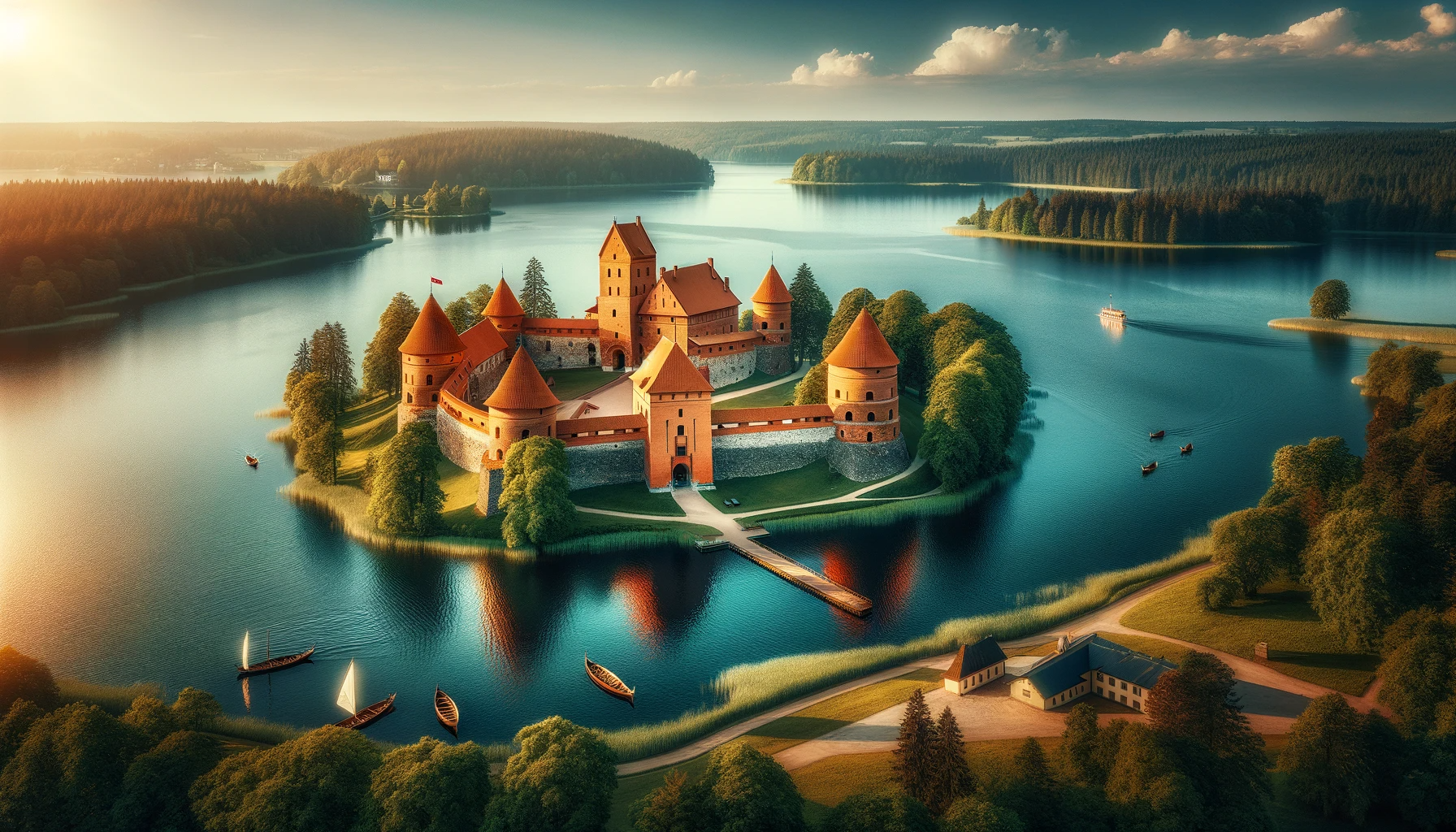
Lithuania is a nation that has undergone significant historical changes, shaping its unique cultural identity and resilient society. It continues to evolve as a dynamic European country, balancing its rich past with modern development and integration
- New Year's Day Naujieji metai 🔥 Long weekend
- Restoration of the State Day Lietuvos valstybės atkūrimo diena
- Restoration of Independence Day Lietuvos nepriklausomybės atkūrimo diena
- Easter Sunday Velykos
- Easter Monday Velykų antroji diena
- Labour Day Tarptautinė darbo diena
- Midsummer Day Rasos ir Joninių diena
- Statehood Day Valstybės diena
- Assumption Day Žolinė
- All Saints' Day Visų šventųjų diena
- All Souls' Day Vėlinės
- Christmas Eve Kūčios
- Christmas Day Kalėdos
- Boxing Day Antroji Kalėdų diena
- New Year's Day Naujieji metai
- Restoration of the State Day Lietuvos valstybės atkūrimo diena 🔥 Long weekend
- Restoration of Independence Day Lietuvos nepriklausomybės atkūrimo diena 🔥 Long weekend
- Easter Sunday Velykos
- Easter Monday Velykų antroji diena
- Labour Day Tarptautinė darbo diena
- Midsummer Day Rasos ir Joninių diena 🔥 Long weekend
- Statehood Day Valstybės diena 🔥 Long weekend
- Assumption Day Žolinė
- All Saints' Day Visų šventųjų diena
- All Souls' Day Vėlinės
- Christmas Eve Kūčios
- Christmas Day Kalėdos
- Boxing Day Antroji Kalėdų diena
Frequently Asked Questions
-
Lithuania has 14 official public holidays in 2026.
-
Lithuania has 14 official public holidays in 2027.
-
The next public holiday in Lithuania is All Saints' Day on November 1, 2026 (in 18 days).
-
In 2026, Lithuania has 1 public holiday where taking just one extra day off creates a long weekend.
-
In 2027, Lithuania has 4 public holidays where taking just one extra day off creates a long weekend.
-
In 2026, the following public holidays fall on a Saturday or Sunday (the weekend in Lithuania): Easter Sunday, Assumption Day, All Saints' Day, Boxing Day.
-
In 2027, the following public holidays fall on a Saturday or Sunday (the weekend in Lithuania): Easter Sunday, Labour Day, Assumption Day, Christmas Day, Boxing Day.
List of Public Holidays and National Holidays for Lithuania in the year 2024
- New Year’s Day – Monday, 1 January 2024
- Independence Day – Friday, 16 February 2024
- Independence Restoration Day – Monday, 11 March 2024
- Easter Sunday – Sunday, 31 March 2024
- Easter Monday – Monday, 1 April 2024
- Labour Day – Wednesday, 1 May 2024
- Mother’s Day – Sunday, 5 May 2024
- Father’s Day – Sunday, 2 June 2024
- St John’s Day – Monday, 24 June 2024
- King Mindaugas’ Day – Saturday, 6 July 2024
- Assumption Day – Thursday, 15 August 2024
- All Saints’ Day – Friday, 1 November 2024
- All Souls’ Day – Saturday, 2 November 2024
- Christmas Eve – Tuesday, 24 December 2024
- Christmas Day – Wednesday, 25 December 2024
- 2nd Day of Christmas – Thursday, 26 December 2024
History
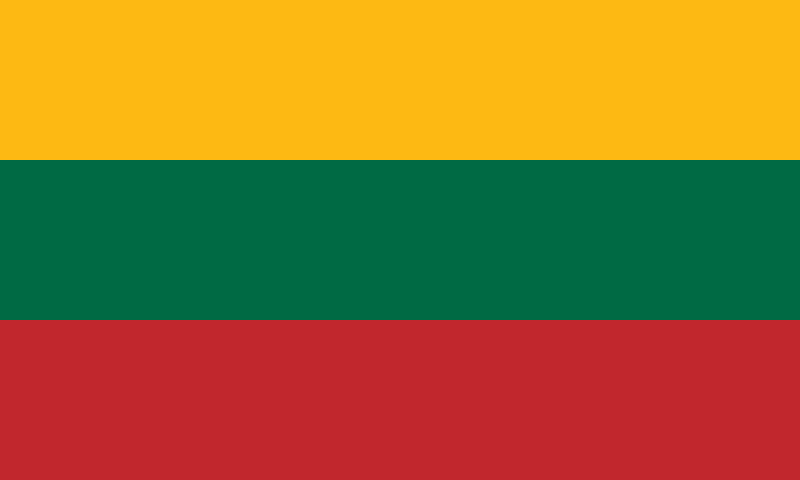
- Early History: Inhabited since prehistoric times, Lithuania’s recorded history begins with the establishment of the Grand Duchy of Lithuania in the 13th century, which became one of the largest states in Europe.
- Union with Poland: The 1569 Union of Lublin united Lithuania with Poland, forming the Polish-Lithuanian Commonwealth, a major European power of its time.
- Partitions and Occupations: The late 18th century saw the partition of the Commonwealth and subsequent occupation by Russia, followed by a brief period of independence after World War I.
- Soviet Era: Lithuania was annexed by the Soviet Union during World War II. It faced decades of Soviet rule, marked by resistance and cultural suppression.
- Restoration of Independence: In 1990, Lithuania became the first Soviet republic to declare independence, leading to the eventual collapse of the Soviet Union.
Geography
- Location: Situated in the Baltic region of Europe, Lithuania is bordered by Latvia, Belarus, Poland, and Russia (Kaliningrad Oblast), and has a coastline along the Baltic Sea.
- Terrain: Characterized by its flat lands, numerous lakes and forests, and the Neman River, which flows into the Baltic Sea.
- Climate: A mix of maritime and continental, with wet, moderate winters and summers.
Culture
- Rich Heritage: Lithuanian culture is a blend of indigenous, Baltic, and Slavic elements, influenced by its history of Polish and Russian rule.
- Folk Traditions: Strong folk music and dance traditions, renowned for its polyphonic singing style, the sutartinės.
- Language: Lithuanian is one of the oldest languages in Europe, retaining ancient Indo-European features.
Economy
- Post-Soviet Transformation: Since independence, Lithuania transitioned from a Soviet economy to a market economy and has become one of the fastest-growing economies in the European Union.
- Key Sectors: Major economic sectors include information technology, biotechnology, manufacturing, and logistics.
- European Integration: Joined the European Union and NATO in 2004 and adopted the Euro in 2015.
Society
- Demographics: Predominantly ethnic Lithuanians, with Polish, Russian, and Belarusian minorities.
- Education and Healthcare: A strong education system with high literacy rates and a universal healthcare system.
- Urbanization: Major urban centers include the capital city, Vilnius, known for its medieval architecture, as well as Kaunas and Klaipėda.
Environmental Focus
- Natural Landscapes: Notable for its lush forests, thousands of lakes, and protected national parks like Aukštaitija National Park.
- Sustainability Efforts: Committed to environmental protection and sustainable development, with initiatives in renewable energy and conservation.
International Relations
- Global Engagement: An active member of international organizations, Lithuania plays a significant role in European and global affairs, particularly in advocating for human rights and democratic values.
- Regional Cooperation: Engages in strong regional cooperation within the Baltic States and the Nordic-Baltic Eight (NB8).
Tourism
- Cultural and Natural Attractions: Offers a mix of historical sites, including the UNESCO World Heritage-listed Vilnius Old Town, Trakai Castle, and the Curonian Spit, as well as natural beauty for outdoor activities.
- Heritage Tourism: Rich in cultural heritage, from medieval architecture to vibrant contemporary arts and cultural festivals.
