
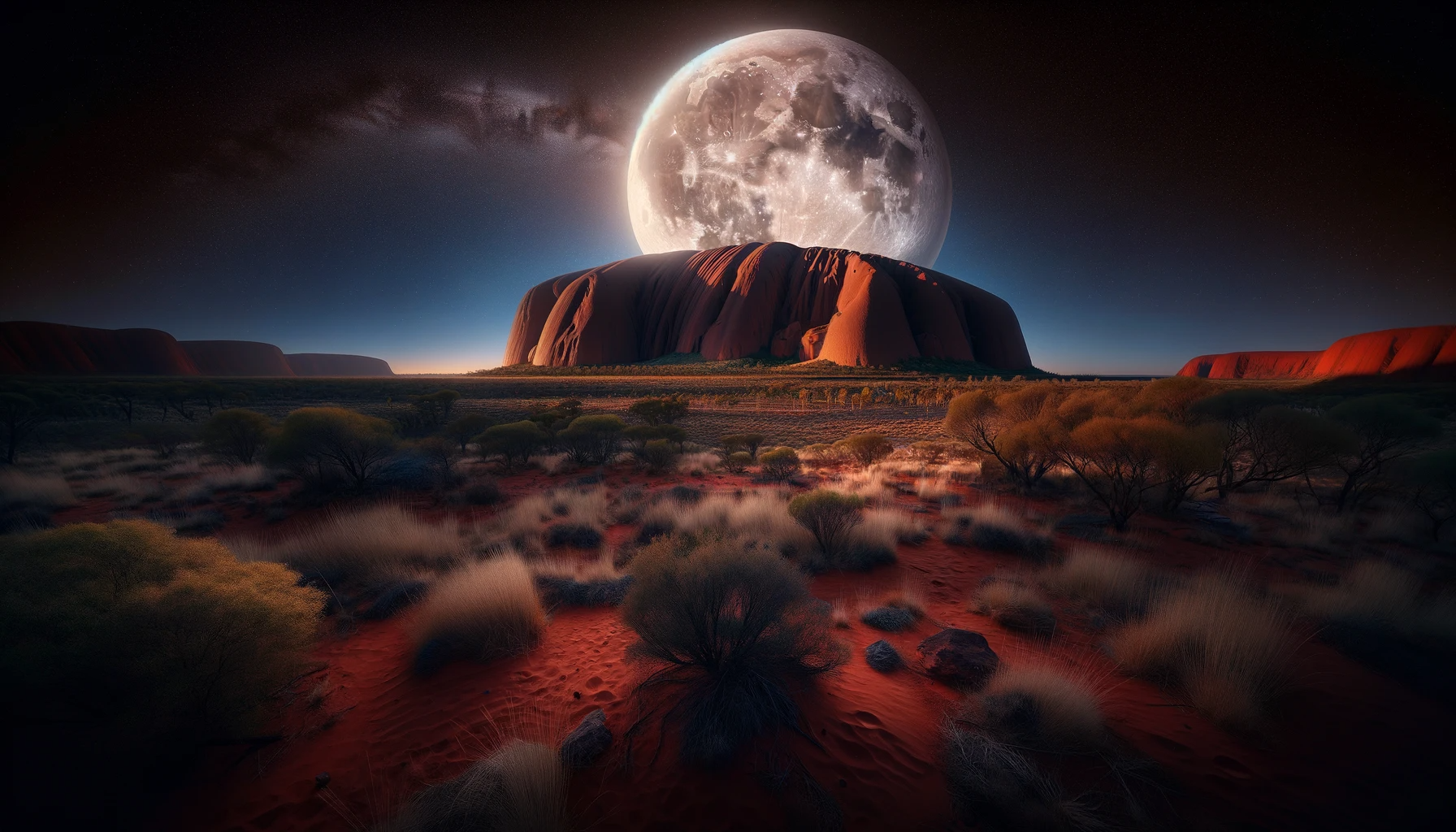
Uluru, also known as Ayers Rock, is a majestic sandstone monolith in the heart of Australia’s Red Centre. Known for its spiritual significance and stunning natural beauty Uluru provides an awe-inspiring backdrop for watching the full moon. Surrounded by the vast desert and under the clear Outback sky, here are some of the best places in and around the area to watch the full moon and immerse yourself in an unforgettable celestial experience.
- 3 Sat Full Moon Full Moon 🕐 19:32 local time Australia/Darwin 19:49 05:15
- 19 Mon New Moon New Moon 🕐 05:22 local time Australia/Darwin 06:14 20:11
- 2 Mon Full Moon Full Moon 🕐 07:39 local time Australia/Darwin 20:00 06:20
- 17 Tue New Moon New Moon 🕐 21:31 local time Australia/Darwin 06:00 19:22
- 3 Tue Full Moon Full Moon 🕐 21:07 local time Australia/Darwin 19:07 06:09
- 19 Thu New Moon New Moon 🕐 10:53 local time Australia/Darwin 06:43 18:59
- 2 Thu Full Moon Full Moon 🕐 11:42 local time Australia/Darwin 18:39 06:48
- 17 Fri New Moon New Moon 🕐 21:21 local time Australia/Darwin 06:29 18:06
- 2 Sat Full Moon Full Moon 🕐 02:53 local time Australia/Darwin 18:22 07:25
- 17 Sun New Moon New Moon 🕐 05:31 local time Australia/Darwin 07:32 18:15
- 31 Sun Full Moon Full Moon 🕐 18:15 local time Australia/Darwin 17:44 07:10
- 15 Mon New Moon New Moon 🕐 12:24 local time Australia/Darwin 07:30 18:01
- 30 Tue Full Moon Full Moon 🕐 09:26 local time Australia/Darwin 18:14 07:43
- 14 Tue New Moon New Moon 🕐 19:13 local time Australia/Darwin 07:18 17:59
- 30 Thu Full Moon Full Moon 🕐 00:05 local time Australia/Darwin 18:56 07:46
- 13 Thu New Moon New Moon 🕐 03:06 local time Australia/Darwin 07:30 19:02
- 28 Fri Full Moon Full Moon 🕐 13:48 local time Australia/Darwin 18:40 06:54
- 11 Fri New Moon New Moon 🕐 12:56 local time Australia/Darwin 06:37 18:47
- 27 Sun Full Moon Full Moon 🕐 02:19 local time Australia/Darwin 19:21 06:29 Today
- 11 Sun New Moon New Moon 🕐 01:20 local time Australia/Darwin 06:14 19:27
- 26 Mon Full Moon Full Moon 🕐 13:41 local time Australia/Darwin 19:11 05:36
- 9 Mon New Moon New Moon 🕐 16:32 local time Australia/Darwin 05:23 19:12
- 25 Wed Full Moon Full Moon 🕐 00:23 local time Australia/Darwin 20:16 05:47
- 9 Wed New Moon New Moon 🕐 10:21 local time Australia/Darwin 05:30 19:52
- 24 Thu Full Moon Full Moon 🕐 10:58 local time Australia/Darwin 20:05 05:32
- 8 Fri New Moon New Moon 🕐 05:54 local time Australia/Darwin 06:03 20:08
- 22 Fri Full Moon Full Moon 🕐 21:47 local time Australia/Darwin 19:37 05:28
- 7 Sun New Moon New Moon 🕐 01:26 local time Australia/Darwin 06:41 19:54
- 21 Sun Full Moon Full Moon 🕐 08:53 local time Australia/Darwin 19:33 06:32
- 8 Mon New Moon New Moon 🕐 18:59 local time Australia/Darwin 06:21 18:57
- 22 Mon Full Moon Full Moon 🕐 20:13 local time Australia/Darwin 18:38 06:20
- 7 Wed New Moon New Moon 🕐 09:21 local time Australia/Darwin 06:56 18:33
- 21 Wed Full Moon Full Moon 🕐 07:57 local time Australia/Darwin 18:23 07:06
- 6 Thu New Moon New Moon 🕐 20:28 local time Australia/Darwin 06:43 17:48
- 20 Thu Full Moon Full Moon 🕐 20:29 local time Australia/Darwin 17:43 06:55
- 5 Sat New Moon New Moon 🕐 05:10 local time Australia/Darwin 07:44 18:18
- 19 Sat Full Moon Full Moon 🕐 10:14 local time Australia/Darwin 18:08 07:36
- 4 Sun New Moon New Moon 🕐 12:32 local time Australia/Darwin 07:32 18:14
- 19 Mon Full Moon Full Moon 🕐 01:14 local time Australia/Darwin 18:47 07:47
- 2 Mon New Moon New Moon 🕐 19:35 local time Australia/Darwin 07:04 18:12
- 17 Tue Full Moon Full Moon 🕐 16:58 local time Australia/Darwin 18:28 06:58
- 1 Wed New Moon New Moon 🕐 03:11 local time Australia/Darwin 07:01 19:11
- 16 Thu Full Moon Full Moon 🕐 08:33 local time Australia/Darwin 18:58 06:31
- 30 Thu New Moon New Moon 🕐 12:06 local time Australia/Darwin 06:08 18:58
- 15 Fri Full Moon Full Moon 🕐 23:17 local time Australia/Darwin 18:39 05:34
- 29 Fri New Moon New Moon 🕐 23:06 local time Australia/Darwin 05:18 18:46
- 14 Sun Full Moon Full Moon 🕐 12:55 local time Australia/Darwin 19:27 05:24
- 28 Sun New Moon New Moon 🕐 12:54 local time Australia/Darwin 05:23 19:37
- 14 Tue Full Moon Full Moon 🕐 01:38 local time Australia/Darwin 20:20 05:54
- 28 Tue New Moon New Moon 🕐 05:42 local time Australia/Darwin 05:56 20:06
Times in local time · Ayers Rock (Uluru) (Australia/Darwin) · Moon phases after Meeus (±2 min) · moonrise/moonset for -25.34, 131.04 (±2 min)
In 2026 there are 13 full moons and 12 new moons. Times are shown in local time for Ayers Rock (Uluru) (Australia/Darwin).
In 2027 there are 12 full moons and 13 new moons. Times are shown in local time for Ayers Rock (Uluru) (Australia/Darwin).
The next full moon in Ayers Rock (Uluru) is on October 26, 2026 at 13:41 local time (Australia/Darwin), in 29 days.
The next new moon in Ayers Rock (Uluru) is on October 11, 2026 at 01:20 local time (Australia/Darwin), in 14 days.
On the day of the next full moon (October 26, 2026), the Moon rises in Ayers Rock (Uluru) at 19:11 local time in the east-northeast. It sets the next morning at 06:18 in the west-northwest. A full moon rises around sunset and stays visible all night.
Yes! In 2026 there is a Blue Moon in May – this month has two full moons (local time Ayers Rock (Uluru)).
The times are calculated using the Meeus astronomical algorithm (Jean Meeus, Astronomical Algorithms, Chapter 49) and are accurate to within approximately ±2 minutes. All times are displayed in the local timezone of Ayers Rock (Uluru) (Australia/Darwin).
A full moon occurs when the Moon is on the opposite side of Earth from the Sun, making it appear fully illuminated. A new moon occurs when the Moon is between Earth and the Sun, making it invisible from Earth. The cycle from one new moon to the next takes approximately 29.5 days (a lunar month).
When is Full Moon in Uluru (Ayers Rock), Australia , USA in the year 2024
- Friday, January 26, 2024, around 03:24 AM
- Saturday, February 24, 2024, around 10:00 PM
- Monday, March 25, 2024, around 04:28 PM
- Wednesday, April 24, 2024, around 08:17 AM
- Thursday, May 23, 2024, around 10:22 PM
- Saturday, June 22, 2024, around 09:38 AM
- Sunday, July 21, 2024, around 06:45 PM
- Tuesday, August 20, 2024, around 02:54 AM
- Wednesday, September 18, 2024, around 11:03 AM
- Thursday, October 17, 2024, around 07:56 PM
- Saturday, November 16, 2024, around 06:59 AM
- Sunday, December 15, 2024, around 06:30 PM
Celestial Splendor: Uluru’s Majestic Spots to Watch the Full Moon
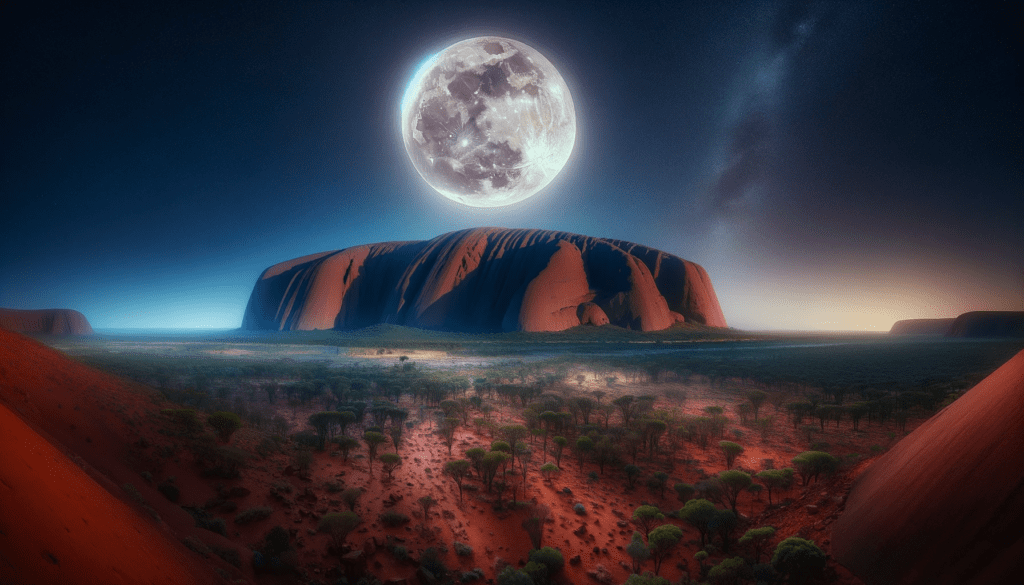
Can you Climb Uluru (Ayers Rock)?
Climbing is banned at Uluru since 2019, but there’s plenty to do during a visit to Uluru.
Talinguru Nyakunytjaku Viewing Area:
Designed specifically for sunrise and sunset views of Uluru and Kata Tjuta, the Talinguru Nyakunytjaku viewing area also offers a spectacular vantage point for full moon viewing. As the moon rises over the desert, it illuminates Uluru in a soft, ethereal light, creating a breathtaking scene.
Kata Tjuta (The Olgas):
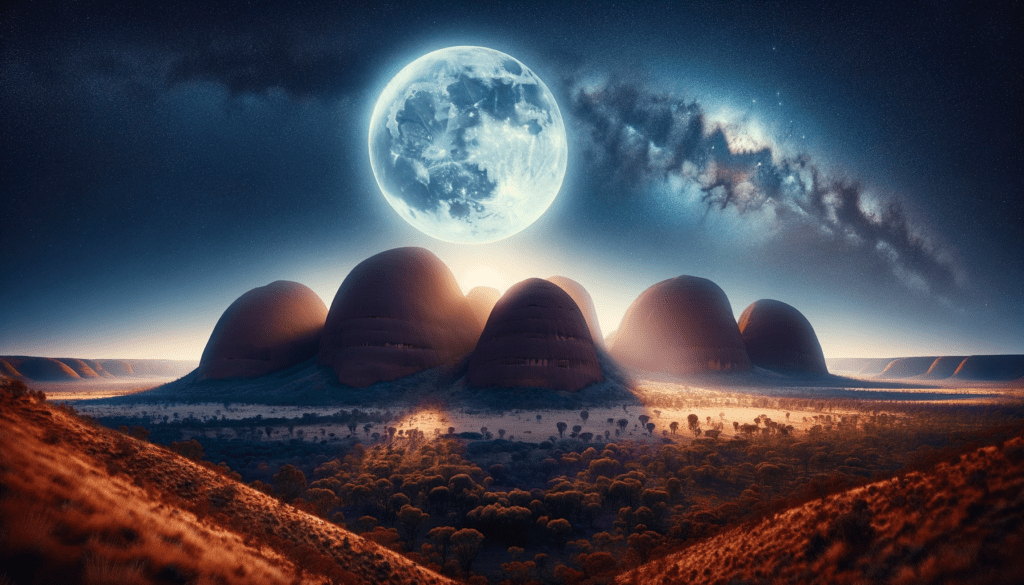
While Uluru is the more famous monolith, nearby Kata Tjuta is equally magnificent. The large, domed rock formations provide a dramatic setting for moon watching. Find a spot at the dune viewing area or along one of the walking trails to see the full moon cast its glow over these ancient rocks.
Uluru Base Walk
Taking the base walk around Uluru at dusk as the full moon rises gives you a close-up experience of the monolith’s grandeur. The changing colors of the rock, combined with the rising moon, create a serene and mystical atmosphere.
The Sounds of Silence Dinner
For a more luxurious experience, consider booking the Sounds of Silence dinner, an outdoor dining experience set in the desert with Uluru and Kata Tjuta as the backdrop. As you dine under the stars, watch the full moon rise and bathe the landscape in a soft, silvery light.
Field of Light
Bruce Munro’s Field of Light installation, with thousands of colored lights spread across the desert floor, offers a unique contrast to the natural full moonlight. The combination of man-made and natural light creates a surreal, otherworldly experience.
Ayers Rock Resort
Various viewing platforms and lookout points around the Ayers Rock Resort offer great views of Uluru and the night sky. The resort often organizes guided stargazing tours, which can provide a more educational and immersive experience of the full moon night.
Sunset Viewing Area:
Although primarily used for sunset views, the sunset viewing area also offers a panoramic view of the desert landscape under the full moon. Watch as the moon rises and the colors of the sky and the land subtly shift, offering a tranquil end to the day.
Tipps for Full Moon at Uluru :
When planning your full moon adventure in Uluru, remember to respect the cultural significance of the area. The Anangu people, the traditional owners of the land, ask that visitors do not climb Uluru. Also, check the lunar calendar, the local weather forecast, and the park’s regulations. Consider bringing a comfortable chair, warm clothing, and perhaps a camera to capture the moon’s beauty over this sacred site. Each location offers a unique way to experience the full moon over Uluru, so let the majestic beauty of the full moon nights guide you to moments of reflection and connection with nature.
Dates of the Full Moon Uluru and for other cities and regions:
- Los Angeles – Full Moon
- Mexico City Full Moon
- New York Full Moon
- Ireland Full Moon Ireland
- London Full Moon
- Berlin – Full Moon
- Dhaka, Bangladesh, Full Moon
- Bangkok, Thailand Full Moon
- Hongkok – Full Moon
- Full Moon Sydney
