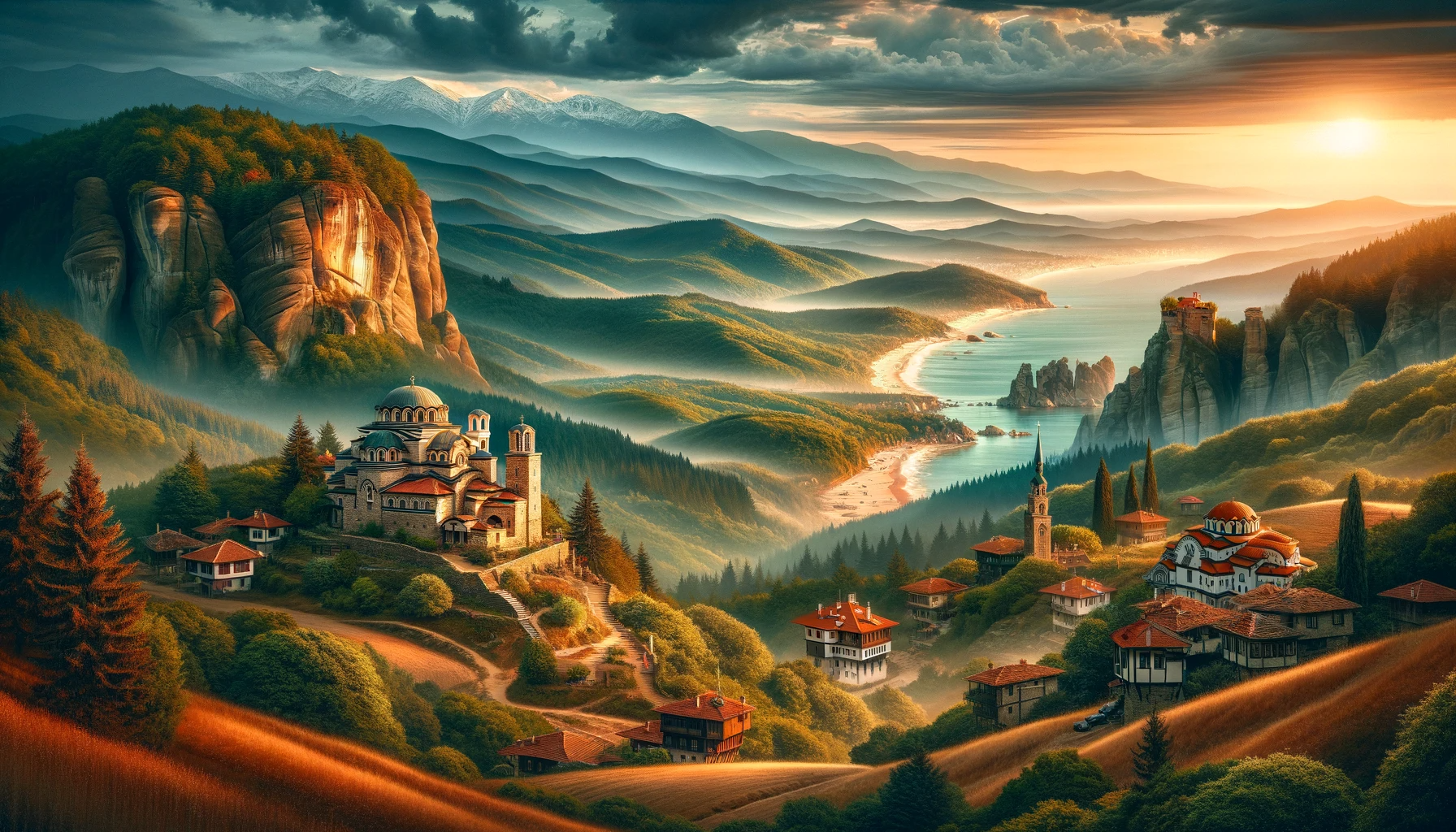
Bulgaria is a country with a deep history, diverse cultural influences, and natural beauty. It continues to evolve, balancing its rich traditions with modern development and integration into European structures.
- New Year's Day Нова година 🔥 Long weekend
- Liberation Day Ден на освобождението 🔥 Long weekend
- Good Friday Разпети петък
- Holy Saturday Велика събота
- Easter Sunday Великден
- Easter Monday Велики понеделник
- Labour Day Ден на труда
- Saint George's Day Гергьовден
- Saints Cyril and Methodius Day Ден на Кирил и Методий
- Unification Day Ден на съединението
- Independence Day Ден на независимостта 🔥 Long weekend
- Christmas Eve Бъдни вечер 🔥 Long weekend
- Christmas Day Рождество Христово
- Christmas Day Рождество Христово
- New Year's Day Нова година
- Liberation Day Ден на освобождението
- Good Friday Разпети петък
- Holy Saturday Велика събота
- Easter Sunday Великден
- Easter Monday Велики понеделник
- Labour Day Ден на труда
- Saint George's Day Гергьовден 🔥 Long weekend
- Saints Cyril and Methodius Day Ден на Кирил и Методий
- Unification Day Ден на съединението
- Independence Day Ден на независимостта
- Christmas Eve Бъдни вечер
- Christmas Day Рождество Христово
- Christmas Day Рождество Христово
Frequently Asked Questions
-
Bulgaria has 14 official public holidays in 2026.
-
Bulgaria has 14 official public holidays in 2027.
-
The next public holiday in Bulgaria is Independence Day on September 22, 2026 (in 4 days).
-
In 2026, Bulgaria has 4 public holidays falling on a Tuesday or Thursday, creating potential long weekend opportunities by taking one extra day off.
-
In 2027, Bulgaria has 1 public holiday falling on a Tuesday or Thursday, creating potential long weekend opportunities by taking one extra day off.
-
In 2026, the following public holidays fall on a Saturday or Sunday: Holy Saturday, Easter Sunday, Saints Cyril and Methodius Day, Unification Day, Christmas Day.
-
In 2027, the following public holidays fall on a Saturday or Sunday: Holy Saturday, Easter Sunday, Labour Day, Christmas Day, Christmas Day.
List of National and Public Holidays in Bulgaria for the year 2025
- New Year’s Day is on Wednesday, January 1st.
- Liberation Day is on Monday, March 3rd.
- Orthodox Good Friday is on Friday, April 18th.
- Orthodox Easter Saturday is on Saturday, April 19th.
- Orthodox Easter Sunday is on Sunday, April 20th.
- Orthodox Easter Monday is on Monday, April 21st.
- Labour Day is on Thursday, May 1st.
- Saint George’s Day / Army Day is on Tuesday, May 6th.
- Culture and Literacy Day is on Saturday, May 24th.
- Culture and Literacy Day Holiday is on Monday, May 26th.
- Unification Day is on Saturday, September 6th.
- Unification Day Holiday is on Monday, September 8th.
- Independence Day is on Monday, September 22nd.
- Day of the Bulgarian Enlighteners is on Saturday, November 1st.
- Christmas Eve is on Wednesday, December 24th.
- Christmas Day is on Thursday, December 25th.
- 2nd Day of Christmas is on Friday, December 26th.
Please Note: This list may be subject to change.
- Day of the Bulgarian Enlighteners: This holiday commemorates Cyril and Methodius, the brothers who created the Cyrillic alphabet.
List of National and Public Holidays in Bulgaria for the year 2024
- New Year’s Day: Monday, 1 January 2024
- Liberation Day: Sunday, 3 March 2024
- Liberation Day Holiday: Monday, 4 March 2024
- Labour Day: Wednesday, 1 May 2024
- Orthodox Good Friday: Friday, 3 May 2024
- Easter Saturday (Orthodox ): Saturday, 4 May 2024
- Easter Sunday (Orthodox) : Sunday, 5 May 2024
- Orthodox Easter Monday: Monday, 6 May 2024
- Saint George’s Day / Army Day: Monday, 6 May 2024
- Culture and Literacy Day: Friday, 24 May 2024
- Unification Day: Friday, 6 September 2024
- Independence Day: Sunday, 22 September 2024
- Independence Day Holiday: Monday, 23 September 2024
- Day of the Bulgarian Enlighteners: Friday, 1 November 2024
- Christmas Eve: Tuesday, 24 December 2024
- Christmas Day: Wednesday, 25 December 2024
- 2nd Day of Christmas: Thursday, 26 December 2024

History
- Early History and Empires: Inhabited since ancient times, Bulgaria’s history is marked by its position at the crossroads of Europe and Asia, with influences from Thracians, Romans, Byzantines, and Slavs.
- First and Second Bulgarian Empires: The establishment of the First Bulgarian Empire in the 7th century, followed by the Second Bulgarian Empire, saw periods of significant power and cultural development.
- Ottoman Rule and Independence: Fell under Ottoman rule for five centuries. Gained independence in 1878, following the Russo-Turkish War.
- 20th Century to Present: Transitioned from monarchy to communist rule post-World War II. In 1989, Bulgaria shifted to a democratic government and a market-based economy. Joined the EU in 2007.
Geography
- Location and Terrain: Located in Southeast Europe, bordered by Romania, Serbia, North Macedonia, Greece, Turkey, and the Black Sea. Geography ranges from mountainous regions to fertile plains and river valleys.
- Climate: Continental climate, with hot summers and cold, snowy winters.
Culture
- Rich Cultural Heritage: Influenced by a mix of Thracian, Slavic, and Bulgar heritage. Renowned for its traditional music, dance, and crafts, including the famous Bulgarian rose oil production.
- Religion: Predominantly Eastern Orthodox Christianity, with beautiful churches and monasteries dotting the landscape.
- Cuisine: Features a variety of fresh vegetables, meats, and dairy products. Famous for dishes like banitsa, shopska salad, and Bulgarian yogurt.
Economy
- Transition and Growth: Transitioned from a state-controlled economy to a market-based economy, with significant reforms in the 1990s and 2000s.
- Key Sectors: Agriculture, energy, and tourism are significant sectors. Information technology and telecommunications are growing industries.
- EU Membership: As a member of the European Union, Bulgaria has access to broader markets and has seen improvements in infrastructure and investment.
Society
- Population: Diverse ethnic groups including ethnic Bulgarians, Turks, and Roma. Bulgarian is the official language.
- Education and Healthcare: Universal education and healthcare systems, though facing challenges such as funding and access.
- Urbanization: Major cities include Sofia (the capital), Plovdiv, Varna, and Burgas. Urban areas are hubs for economic activity and cultural life.
Environmental Initiatives
- Biodiversity and Conservation: Rich in biodiversity, with numerous national parks and protected areas. Efforts are focused on conservation and sustainable tourism.
- Challenges: Addressing environmental issues such as air and water pollution, and managing its natural resources responsibly.
Government and Politics
- Political System: A parliamentary republic with a prime minister as head of government and a president as head of state.
- Domestic and Foreign Policy: Balancing its traditional Slavic ties with its integration into Western institutions. Active in international diplomacy, particularly within the EU and NATO.
Tourism
- Historical and Natural Sites: Attractions include ancient Thracian ruins, medieval fortresses, and monasteries. The Black Sea coast is popular for its beaches and resorts.
- Cultural and Eco-Tourism: Rich in cultural festivals and traditions. Opportunities for eco-tourism and adventure travel in its mountains and rural areas.
Challenges and Future Outlook
- Economic Development: Continuing efforts to boost economic growth, attract foreign investment, and improve living standards.
- Demographic Trends: Addressing challenges related to an aging population and emigration of young people.
- Role in the Region: Navigating its role in the Balkans and broader European context, focusing on stability, economic cooperation, and cultural exchange.
